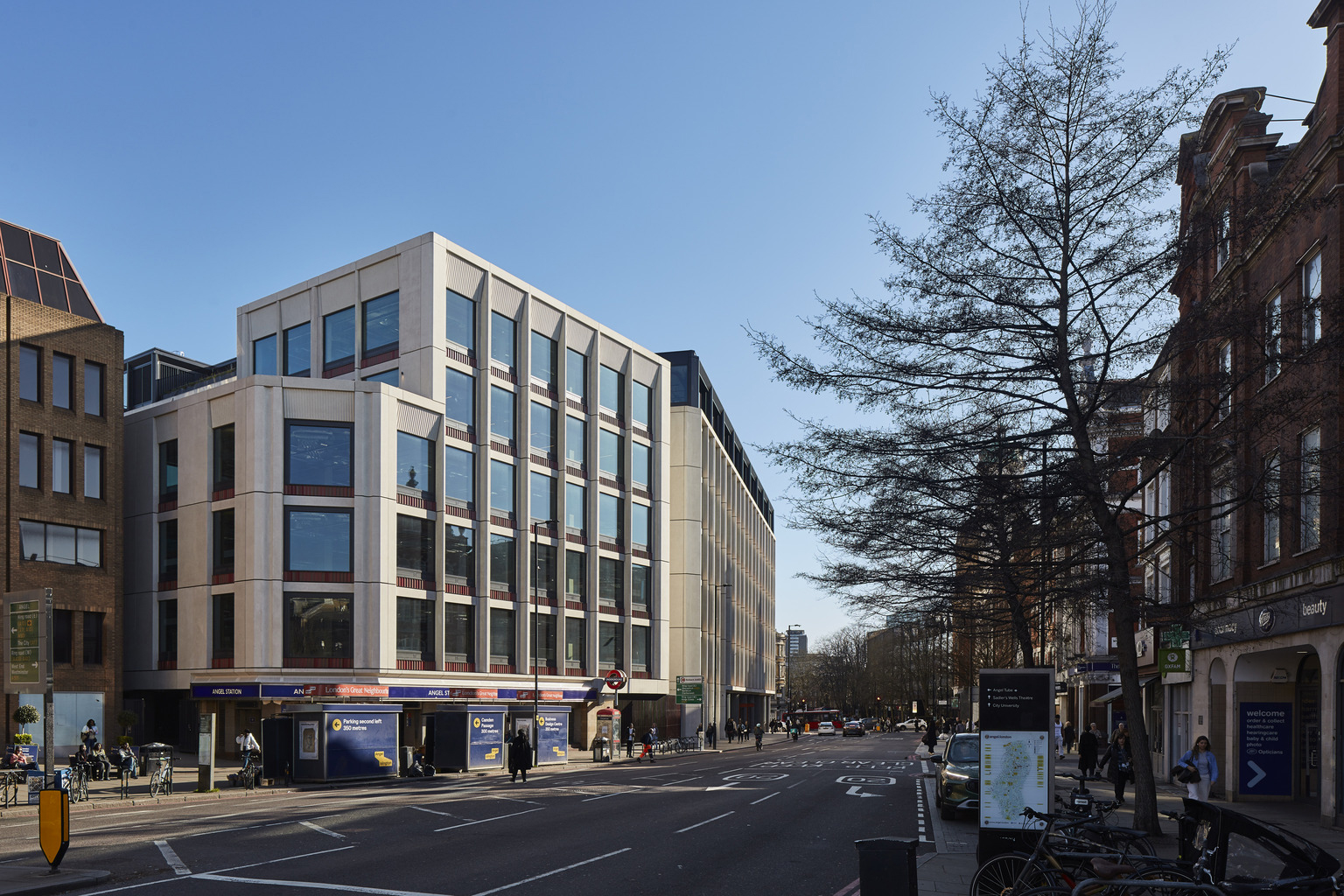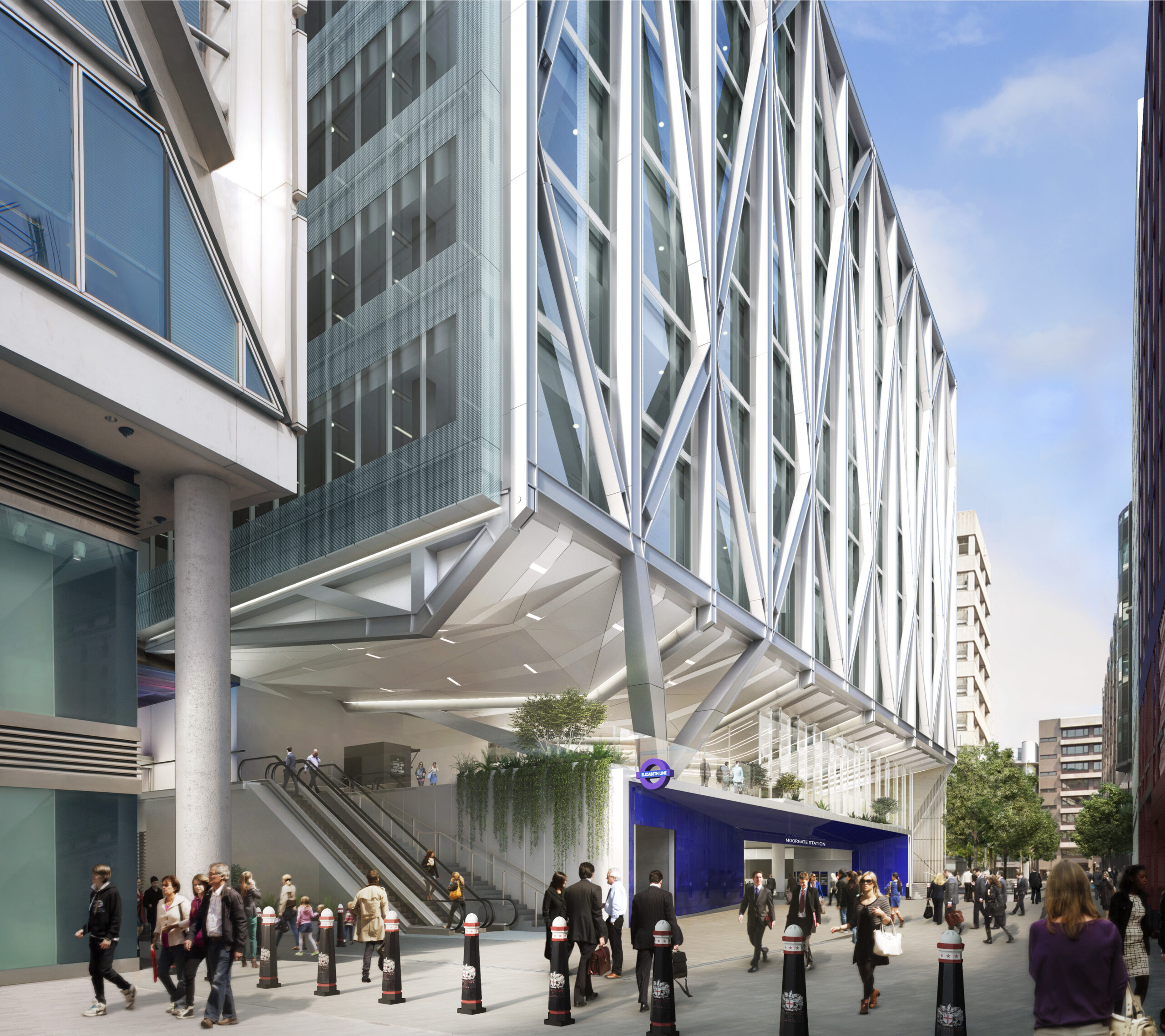

debating the future of the City
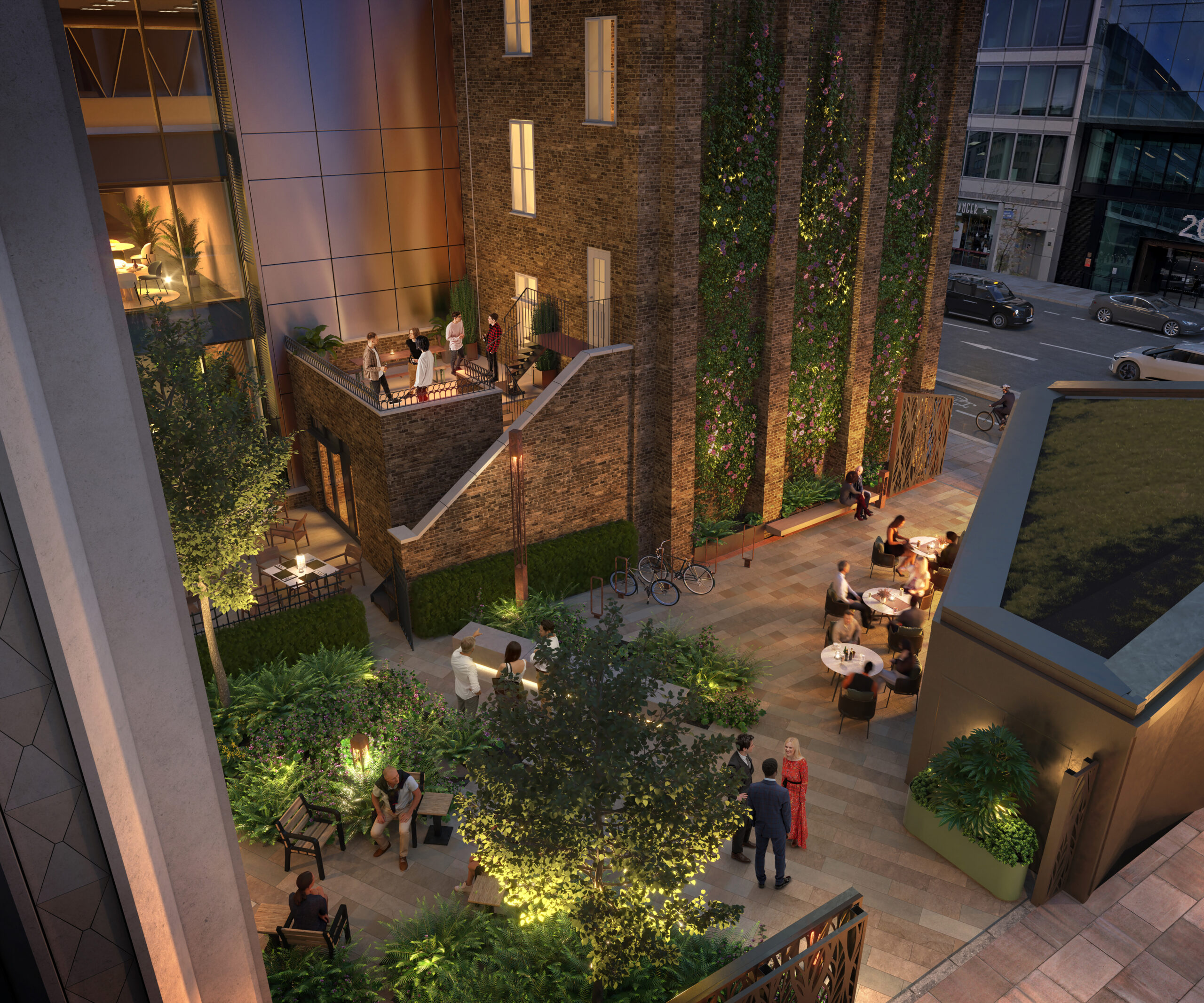
Developer CO-RE’s Stonecutter (previously Stonecutter Court) now occupies the block on the west side of Farringdon Road bounded by Stonecutter Street to the north, St Bride’s Street to the south west and Harp Alley to the south.
Stonecutter fronts Farringdon Road, with its main entrance on Stonecutter Street
Developed in partnership with Canadian investor La Caisse and investment manager PIMCO, it is designed by architect TP Bennett, engineer Thornton Tomasetti, built by contractor MACE, and is fully let to three tenants. It was completed in July.
CAF members’ visit was hosted by developer CO-RE’s associate director Alex Thorpe, TP Bennett director James Elliott, and Eddie Jump, director of Thornton Tomasetti.
The 236,000 sq ft scheme has ‘one of the lowest embodied carbon inputs’ of any new office schemes in the City of London with a claimed figure of 581kg CO²/m² – below the London Plan target of 600kg CO²/m².
Thornton Tomasetti’s bar chart (below) illustrates embodied carbon figures gleaned from public planning applications for 23 (unidentified) buildings completed since March 2022 – when the London Plan’s targets were set and the requirement to state carbon figures in applications was put in place. Stonecutter in red is at the right-hand end of the graph.

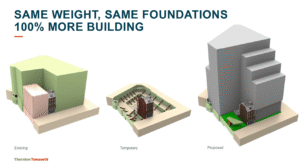
The architectural design and engineering strategy has produced a new building that is twice the size but the ‘same weight’ as its Po-Mo predecessor, partly by using 71% of the existing foundation piles.
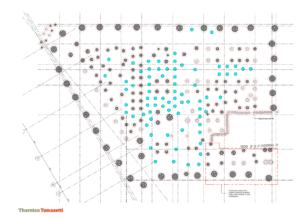
Piling diagram shows new piles in green, used existing piles in dark grey, and unused existing piles in light grey
It is also a building that doesn’t really have a ‘rear’ as all main facades address the surrounding streets and alleys. The chief entrance is on Stonecutter Street, now ‘re-profiled’ to be more pedestrian friendly with a new single level surface treatment.
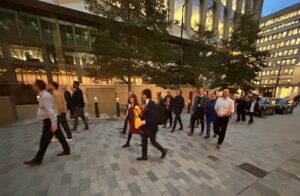
Members test the pedestrian friendly reprofiled Stonecutter Street
A 150,000 sq ft pre-letting to commercial lawyers Travers Smith enabled the scheme to proceed as soon as possible. Travers Smith were able to negotiate a dedicated entrance and lifts and a dramatic double-height auditorium at the upper levels on the southern corner with views towards St Paul’s and the river. The main entrance on Stonecutter Street is available to other occupants, The Trainline and Vantage Data Centres.
The scheme has a useful leisure/retail public offering that should encourage some new street life and activity. The Victorian Grade II-listed Hoop & Grapes pub is retained on the Farringdon frontage and set within a new pocket park to its rear that includes a new angular café pavilion.
There is also a retail/restaurant space in the ground floor of the main building, and potentially a route through the main reception area of the building from Harp Alley, through the courtyard, to Stonecutter Street to the north.
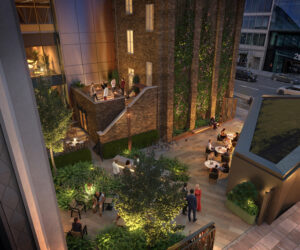
View of the pocket park and retained pub, with new pavilion (right)
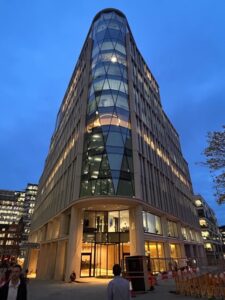
The Travers Smith entrance and ‘tower’ feature fronting St Bride’s Street
The pub’s upper storey sets the cornice line for the base element of the new building, which steps back from Farringdon Road to accommodate external terraces at the upper levels. There is a 3.3m fall from east to west across the site marking the Fleet Valley which the scheme’s tall ground floor accommodates, reflected in the tall entrance area.
Stonecutter’s name and that of the street is a reference to diamond cutting activities in nearby jewellery district Hatton Garden, expressed in various faceted and triangulated elements of detailing around the building, in the glazing and a mix of stone elements, and in the architectural design of the café pavilion in the pocket park.
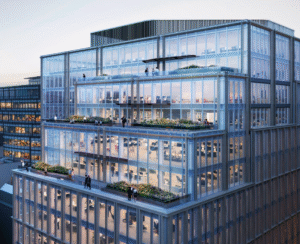

Terracing and a faceted detail in Stonecutter’s façade