


Thursday, 24 October 2019
A select group of City Architecture Forum Members were privileged to have an insightful visit around the newly refurbished Bracken House.
The building sees the return of The Financial Times to its historic headquarters and their Global Facilities Director, Darren Long, welcomed us to their new home. The tour was conducted by John Robertson Architects Director, David Magyar and Project Director, Zemien Lee.
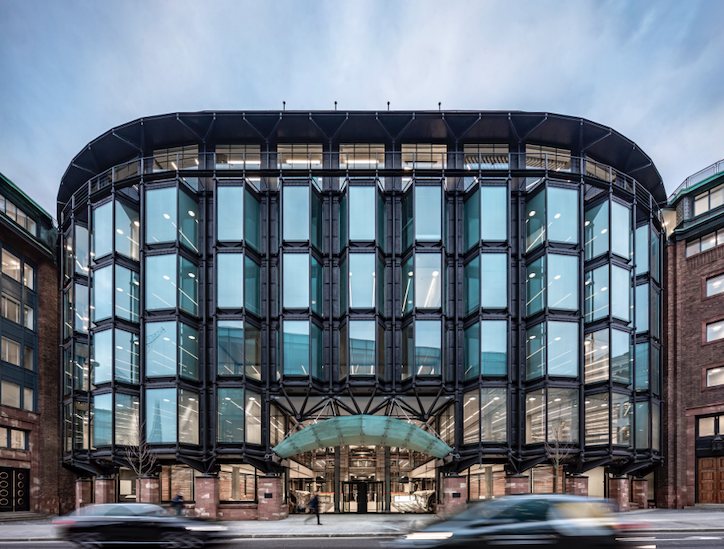
It was fascinating to see the building brought back to life as a contemporary state of the art headquarters for the FT and lovely to see them return to their iconic home so close to St Paul’s.
Bracken House was first designed by Sir Albert Richardson in 1959 and then significantly redeveloped in 1988 by Sir Michael Hopkins, replacing the central printing works between two brick and pink sandstone wings (reflecting the colour of the FT) with new, large post ‘Big Bang’ open office floors.
The building is Grade II Listed and within the constraints of the St Paul’s Heights Grid, so the team has done a wonderfully sympathetic refurbishment, which enhances the iconic architecture of two great knighted architects to bring the building up to the most contemporary standards and expectations.
On arrival, the entrance has been doubled in size, with two single storey areas either side of the double height existing entrance lobby, to provide generous waiting lounges. This allows the reception desks to be moved off axis to open up the magnificent central view of the atrium and lifts.
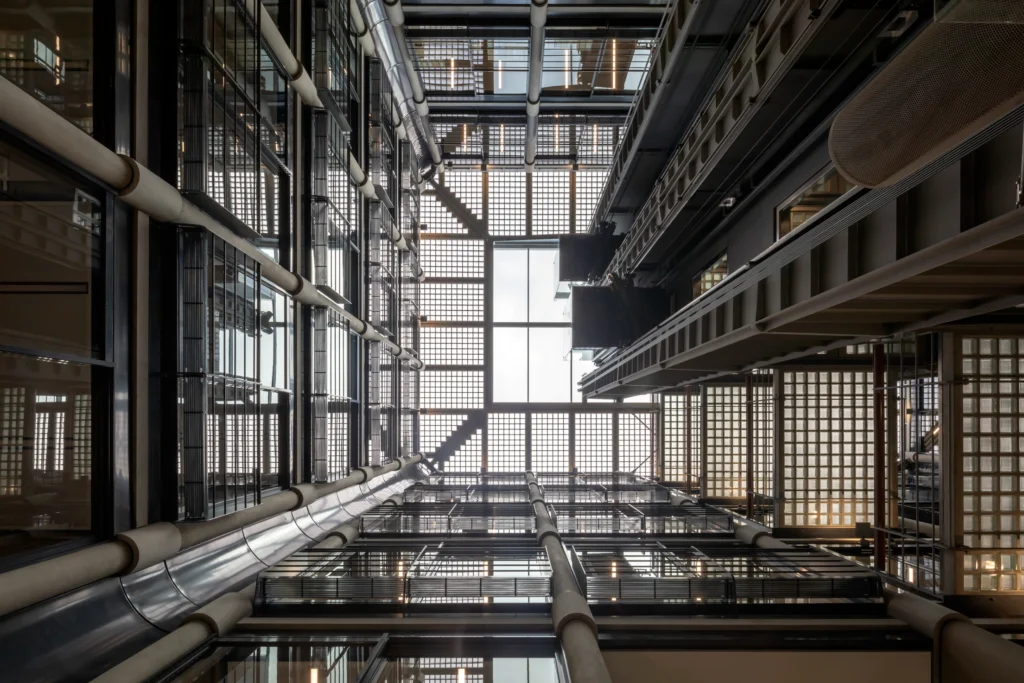
The distinctive lift bank sitting at the centre of the atrium is constructed of exposed concrete, gunmetal painted steelwork and glass blocks to floors and roof. The architects have sensitively replaced the central section of roof with full glass panels flooding the otherwise faithfully maintained area with natural light.
The two wings, being from an earlier era, have different floor heights and much smaller floor plates.
They have been very cleverly connected into the large central office floors by new light wells that replace old solid cores of WCs and risers. These have stairs and bridges, are flooded with light and transform the connections of the building wings. Materials are faithful to the modernity of the 1980s building with glass, steel and concrete panels, and a clever use of oak floors and wall panels providing warmth and contrast to an otherwise neutral palette.
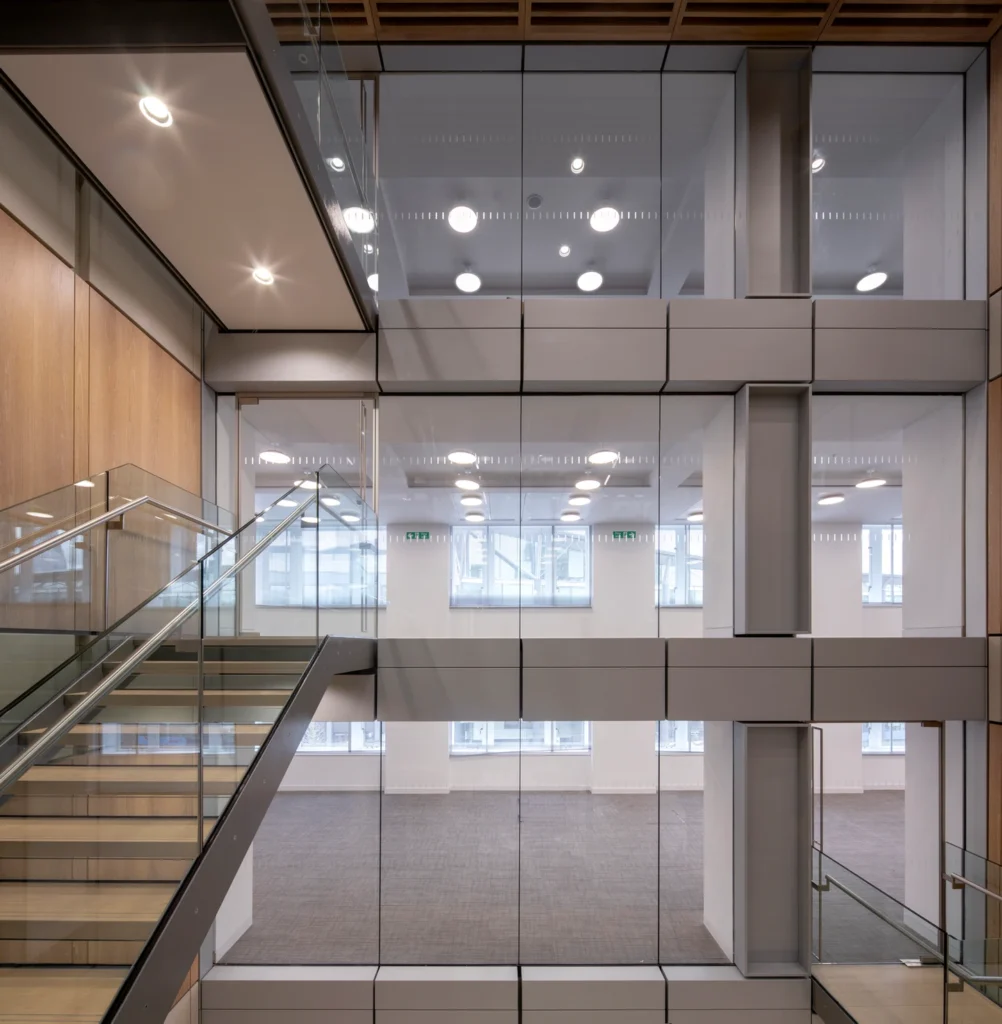
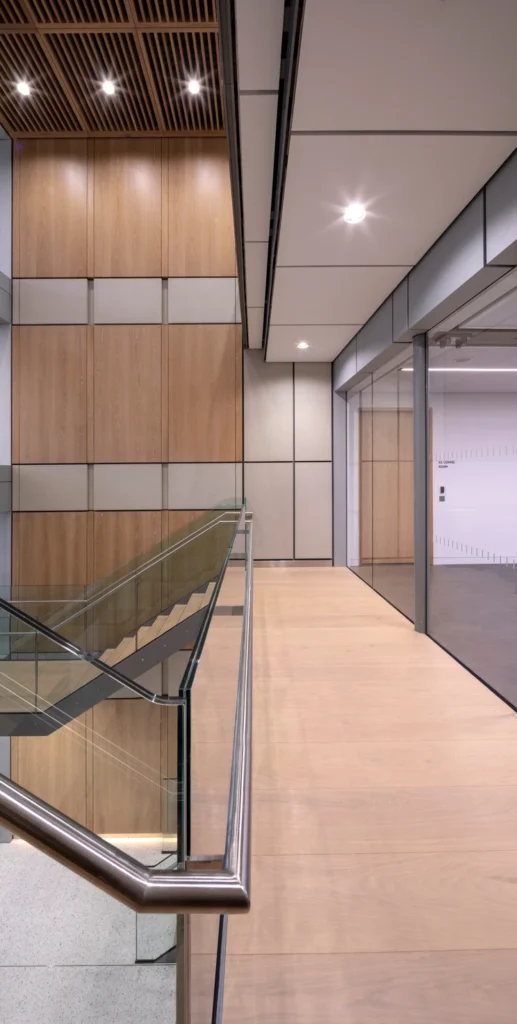
The side wings now provide appealing, bright, intimate office spaces as a contrast to the large open plan floors, and a choice of work places for the FT team who are all working flexibly with a fully agile office designed by interior architects Perkins + Will.
Another transformation is the new ceiling and lighting, providing bright working areas. Old 1980s fittings are replaced with the latest contemporary, seamless, linear LED fittings. These are now running towards the perimeter, rather than parallel to the facades, helping to better express the radial geometry of the Hopkins office floors. Sensitive contemporary circular fittings have been used for the wings, similar to the original arrangements.
We visited the old Bracken House boardroom with its magnificent picture window facing St Paul’s, where Churchill often met his long-term political friend and colleague, and FT Editor, Viscount Bracken. This is now a contemporarily designed dining and meeting room.
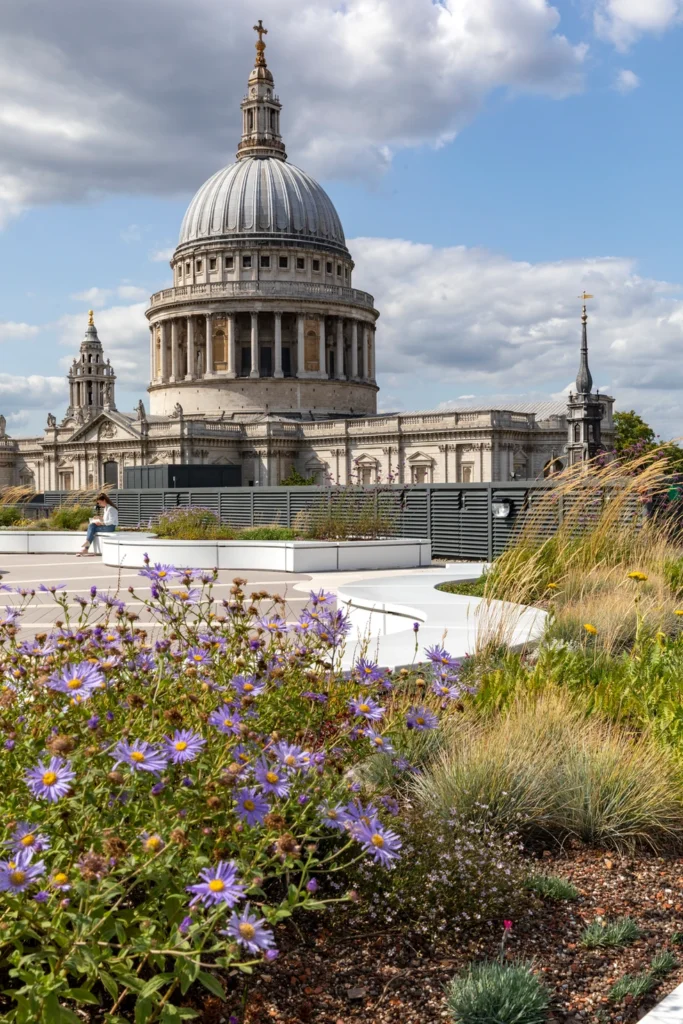
Perhaps the most stunning improvement is the new accessible roof terrace. With severe planning restrictions allowing no interventions breaching St Paul’s heights the landscape is cleverly integrated to provide an amazing amenity for the FT staff with stunning 360 degree views.
A beautifully curved planter of external quality polished Corian forms benches and planters and sits alongside radial paving. This is inspired by the dome of Palazzo Carignano’s Baroque masterpiece that had originally influenced the design of Hopkins’ Bracken House.
The whole team is to be congratulated on improving what was already an inspired building.
Words: Richard Beastall
City Architecture Forum member,
tp bennett
Images: © John Robertson Architects