
CAF members were very pleased to be able to visit the nearly completed project at 1 Liverpool Street this week. Robert Kennett, Lee Higson and Rupert Willard from Eric Parry Architects together with Ben Stallward from Aviva Investors and Jonathan Emmines, Martin Bailey and Levan Sichinava from Mace gave an informative and interesting tour of the building which displayed their enthusiasm and commitment to the project of which they are justifiably very proud.
The building was originally commissioned in 2012 by a joint venture between Aviva Investors and TfL as part of the Crossrail over site programme. Whilst constructing an office building in the City might normally be seen to be a reasonably straight forward task, the constraints associated with this site can be justifiably described as super-complex which has led to one of the most complicated projects ever undertaken in the City.
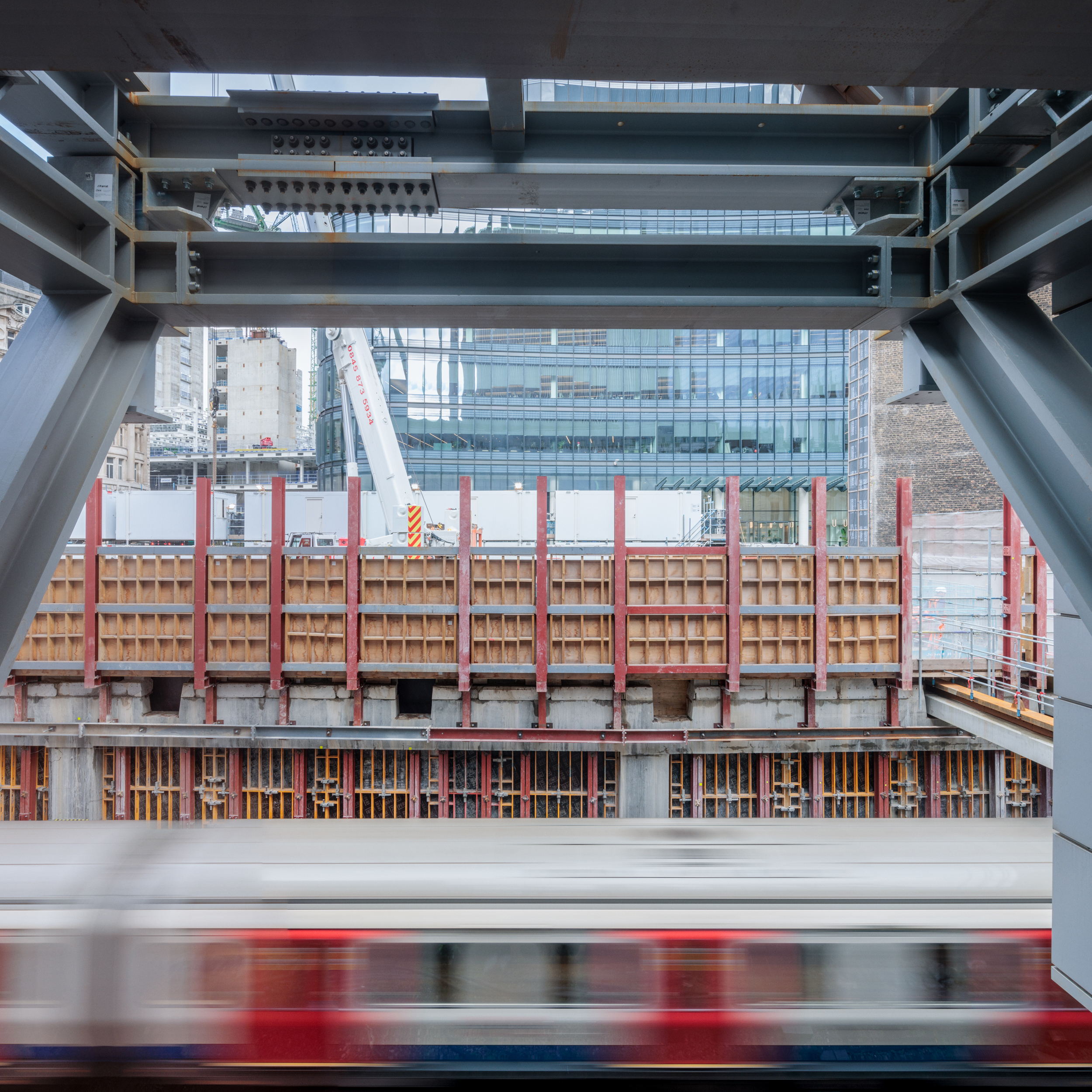
A combination of the Metropolitan Line tunnel, Elizabeth Line tunnels and vent shaft, a sewer, a post-office tunnel, and a City of London utilities tunnel combine to create a spaghetti like configuration which leave just 25% of the site area available for building structure to hit the ground. These constraints have tested the ingenuity of the design team and contractor to the full extent.
The site sits at a pivot point between Liverpool Street station with its engineering driven architectural language, Broadgate with its sleek and sophisticated curtain wall skin and the historic character of Finsbury Circus with its grand stone buildings. AVIVA’s building on the site was an unremarkable 1980’s office block which contributed little to the townscape in the area. The scale of recent development and the importance of the location as a key hub in the City map suggested that a building of scale would be appropriate on this site – a view which the City of London recognised and were keen to support.
The approach to the design adopted by Eric Parry Architects has been masterful as the building mediates between the engineering driven station spaces and the more traditional Conservation Area. The south and west elevations respond to the surrounding Conservation Area, the west facing elevation closes the vista from Finsbury Circus and views of the elegant elevation can be enjoyed from the Gardens. The north elevation provides an animated backdrop to the newly pedestrianised Liverpool Street, while the east sits as a striking juxtaposition to the building’s four storey public house neighbour.
The design is unarguably modern and responds effectively to both the sinuous glazing of 100 Broadgate and the heavy stonework of Finsbury Circus. The painted cast aluminium is an innovative cladding material, and one where the fine detail can be enjoyed and appreciated by both classicists and modernists.
The composition of the elevations complies with the rules of good urban design, displaying a strong base, lighter body, an attic storey and a mansard roof. The clever insertion of higher floor to floor dimensions at levels 2 and 7 not only adds subtle finesse to the appearance, particularly at level 7, but also increases the internal ceiling height thereby providing tenants with a variety of floor plates to consider whilst adding further value to those floors.
The use of cast aluminium is not common, and several manufacturers were considered before Gartner were chosen to inject some precision German engineering into the process. The painted finish is immaculate and there is absolutely no suggestion that the 9.5m high piers at ground level are anything other than single pieces despite having been welded together.
The colour of the cladding is consistent across the whole building as its warm grey tones respond to the Portland stone facades of its neighbours. Given the depth of the façade and fine detail cast into the metal work, the building responds beautifully to changes in light which scatter stunning geometric patterns across its face.
Apart from reflections in the triple glazed facade, the only colour on the building is a rich red detail around the ground and first floors which adds a strong and confident element to the composition.
The mansard roof form responds to the traditional roofs of the Conservation Area, rather than the more recent Broadgate buildings which introduce stepped terraces. Whilst the materiality at this level is mainly glass and aluminium, wide dormer windows have been introduced which not only introduce a highly articulated roof form, but also minimise the amount of sloped glazing on office floors.
Horizontal zig-zag aluminium louvres run between the dormer windows and introduce a visual solidity more associated with mansard roofs, whilst reducing solar gain and allowing longer views from inside the building to be fully appreciated.
The cladding was largely unitised with the 6m wide dormer elements being brought to site to be craned into place as single units.
Whilst some over site developments display their structure more clearly, 1 Liverpool Street has successfully embedded what is clearly an heroic structure into the building in a discrete and sophisticated way and the design team have created high quality office space in spite of the constraints.
The presence of the tunnels immediately below ground level required lifts to upper floors to start at level 1, thereby allowing them to be located in the centre of the office floor plate. The entrance hall on Liverpool Street leads people towards escalators which rise to first floor where a dynamic café area and library will be well-used amenity space.
Retail units wrap the rest of the ground floor at pavement level.
End of journey facilities are located at first floor with two lifts to transport cycles from pavement level.
10 upper floors of office space wrap around the core which in turn wraps around the TFL vent shaft which rises to level 8 before being capped by the top 3 floors where reconfigured cores help maximise the office floor plates and allow roof terraces to be introduced. The total NIA floor area is 16,825 sq m.
The sustainability credentials of the building are comprehensive as might be expected – BREEAM Outstanding, Well Platinum and Wired Score Platinum.
The project is being delivered by Mace under a D&B Contract with design consultants being novated.
Tenant fit out projects are underway on a number of floors.
Project Team
Client : Aviva Investors
Architect: Eric Parry Architects
Structural Engineer: Mott MacDonald (Stages 1-4) and Robert Bird Group (Stage 5)
Services, Fire, Sustainability & Acoustics: Aecom
Façade Engineering: FMDC
Common areas ID: Gensler
Contractor: Mace
Enabling Works: J F Hunt
Planning Consultant: DP9
Project Manager: WT Partnership
Principal Designer (CDM): Capita
Façade Access & Maintenance: Reef
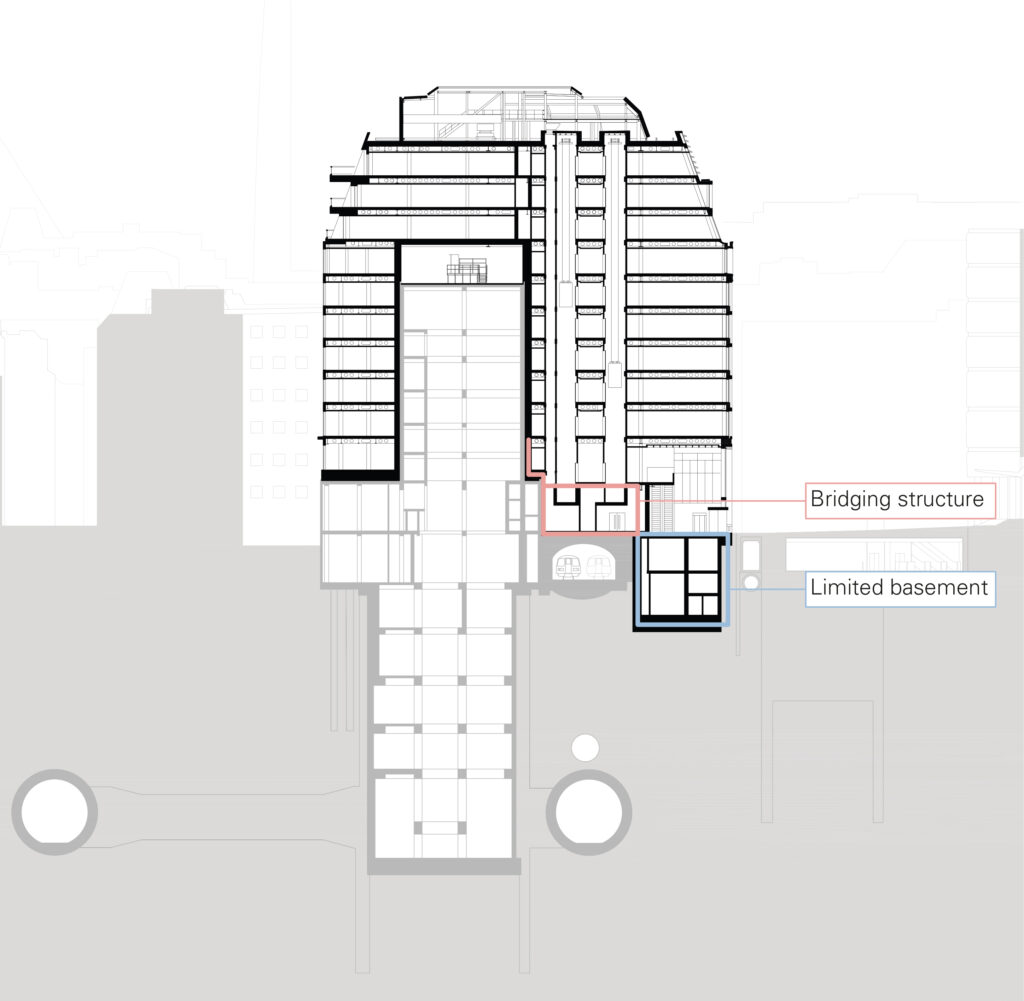
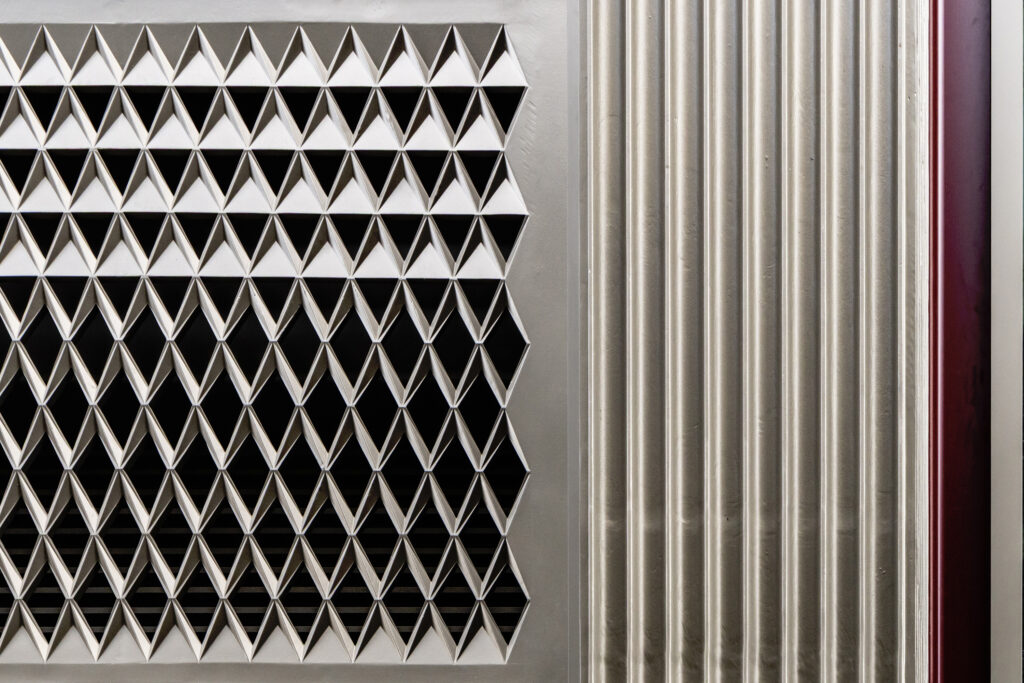
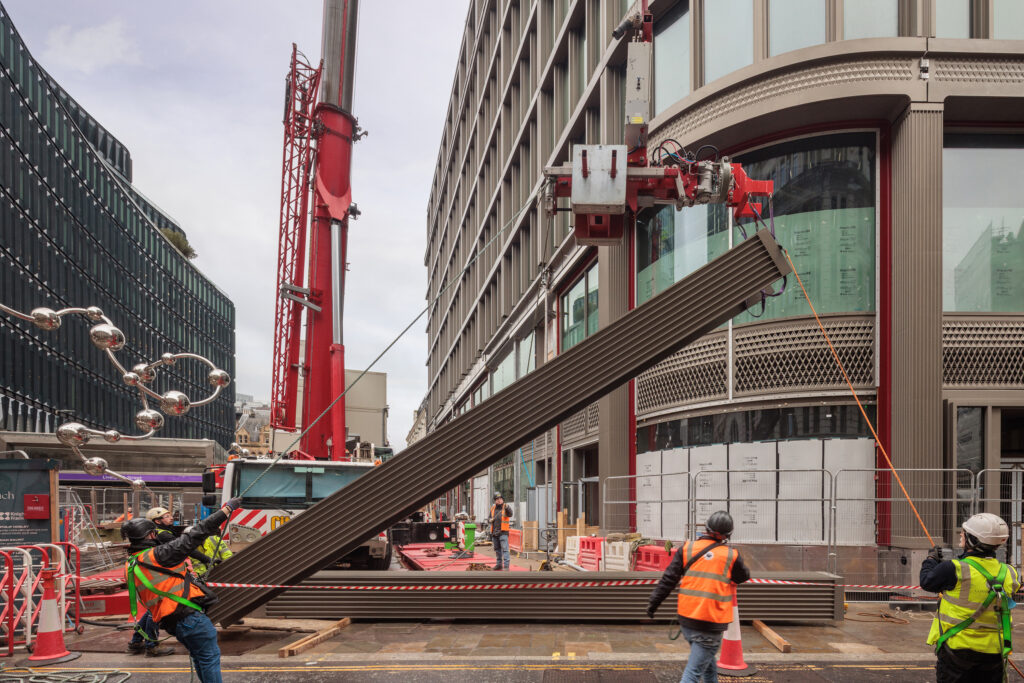
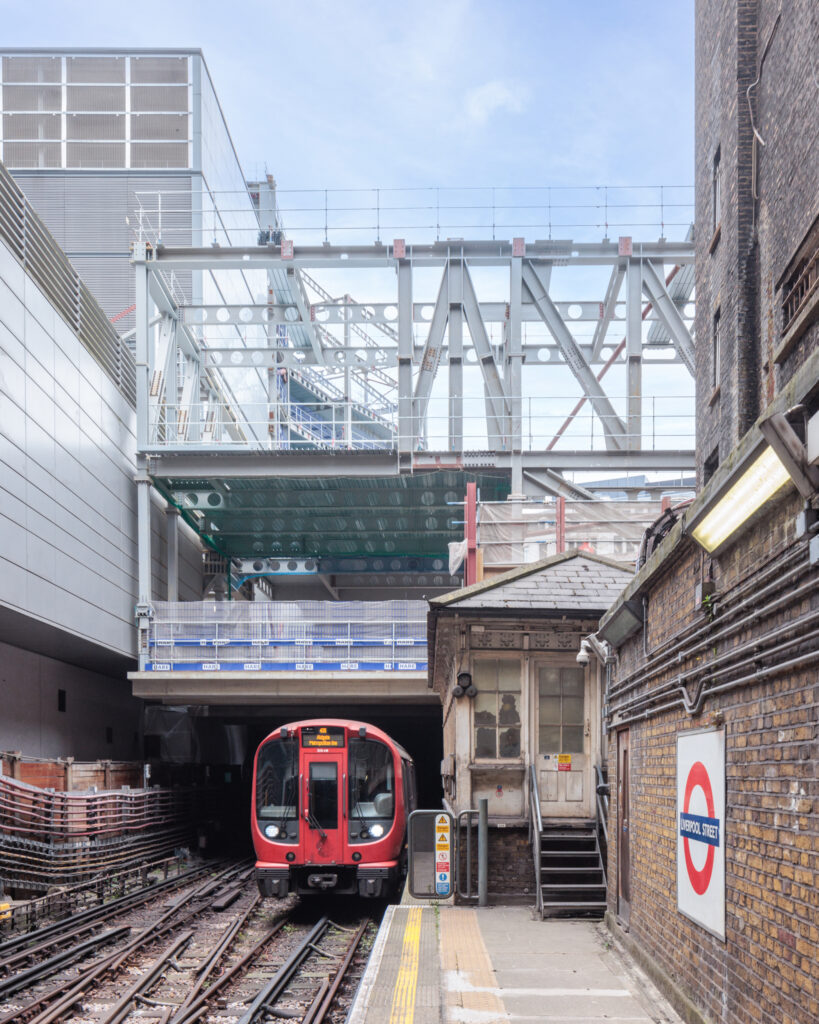
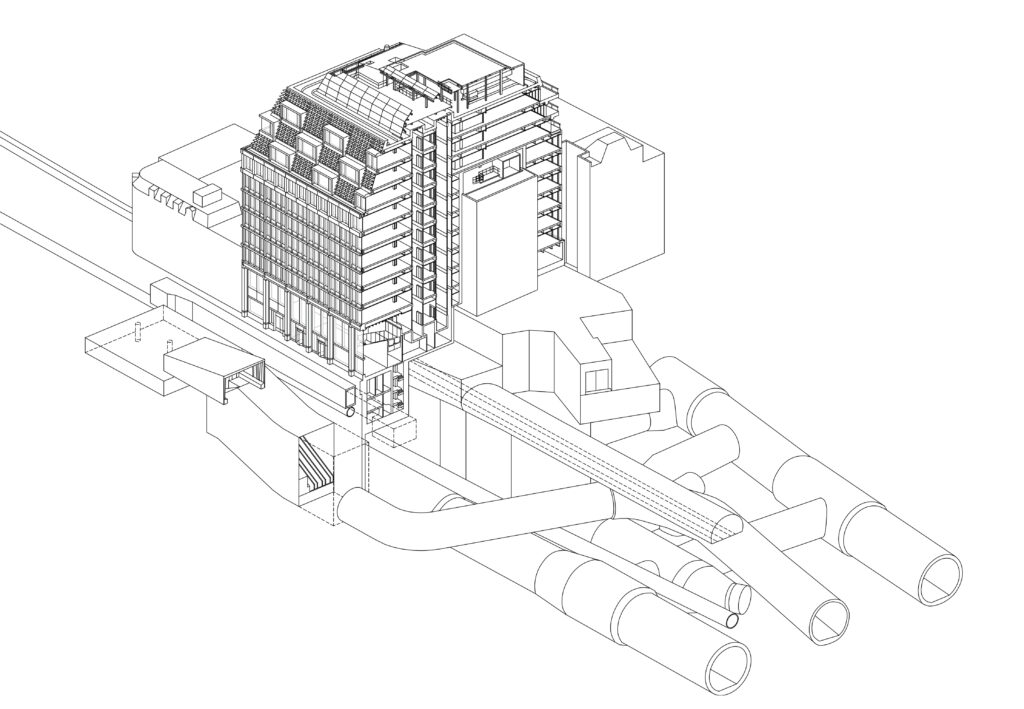
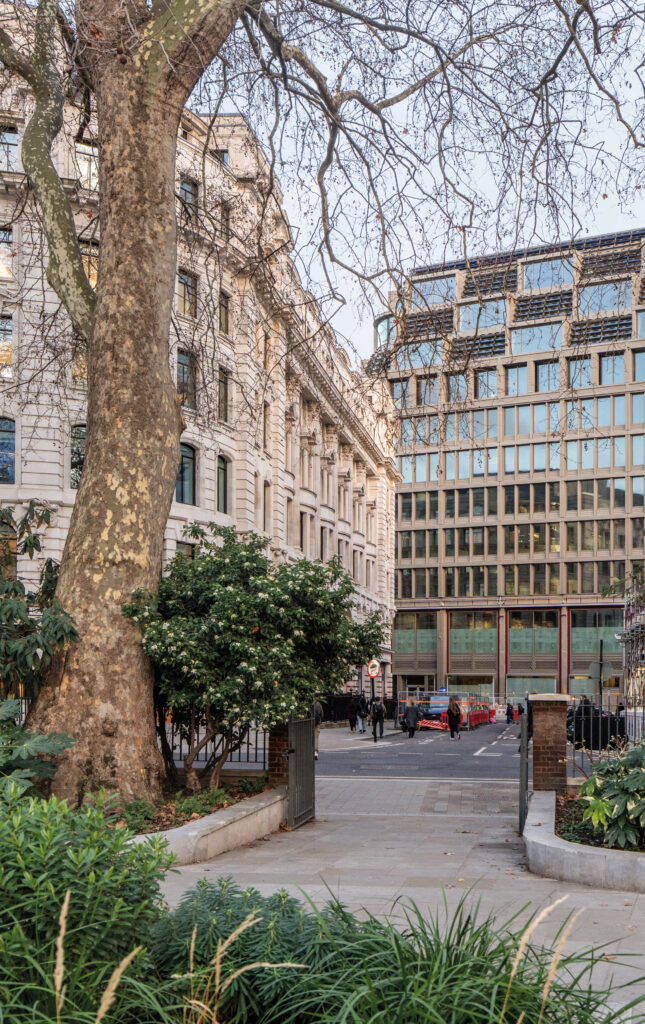
Photo Credit @Dirk Lindner, Eric Parry Architects