

debating the future of the City
What’s a CAF event without cocktails and canapés? Thankfully, this one didn’t disappoint.
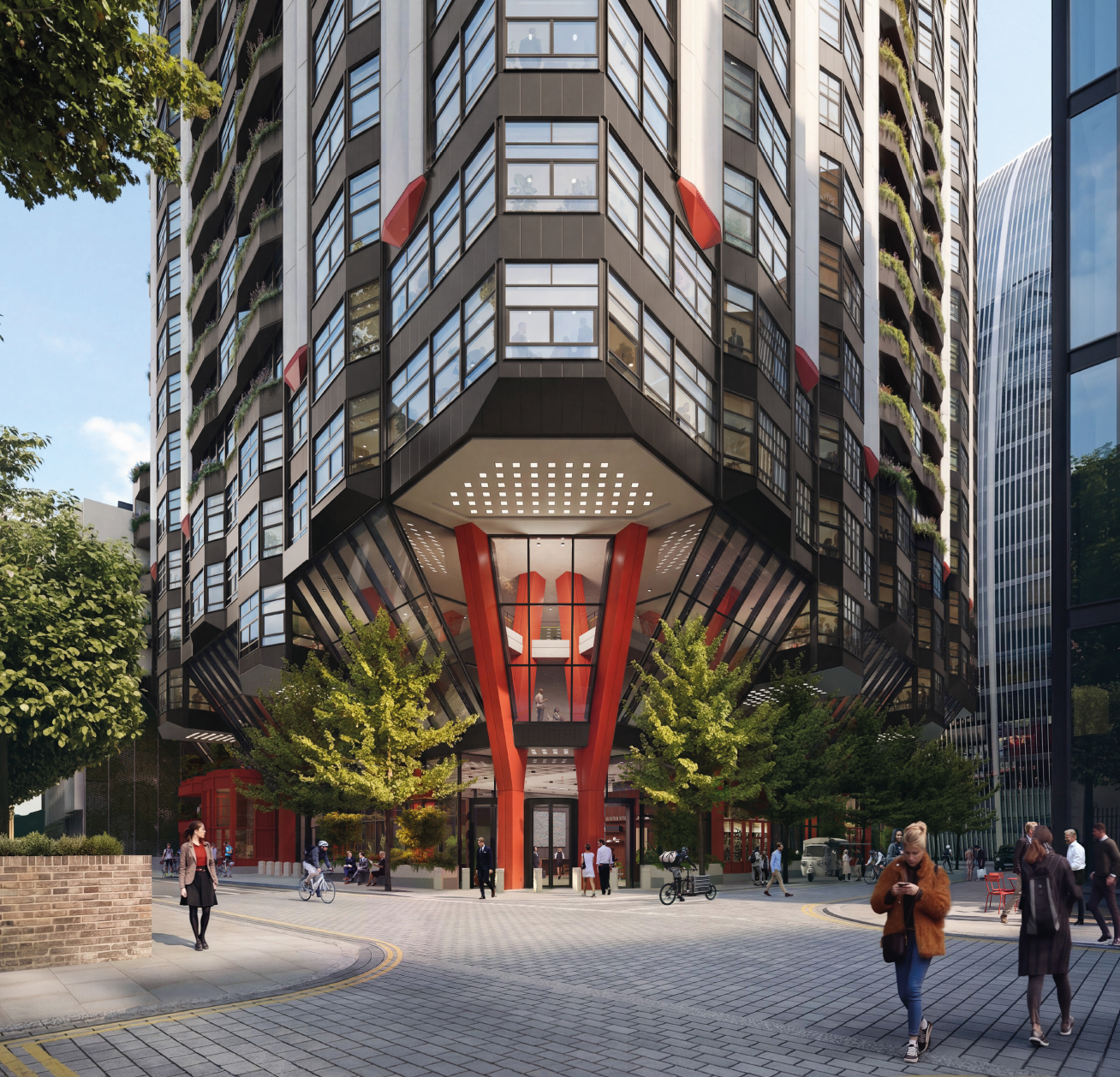
An evening at AHMM’s Clerkenwell studio, looking at the future of offices and in particular, Brockton Everlast’s The Dovetail building in Houndsditch, brought together three distinct perspectives on the workplace of tomorrow: the planner, the architect and the developer.
While each approached the question differently, all arrived at a remarkably similar conclusion: the future office is far less about desks and far more about people, place and adaptability.
Joanna Parker, Principle Officer (Design and Heritage) at the City of London opened with the numbers. The City alone generates over £109bn in economic output annually via its current building stock, yet forecasts suggest a further minimum of 1.2 million sq m will be required by 2040, with employment potentially reaching almost 900,000 workers by 2050.
The discussion quickly moved beyond how much office space London needs and towards what kind of office space will actually matter.
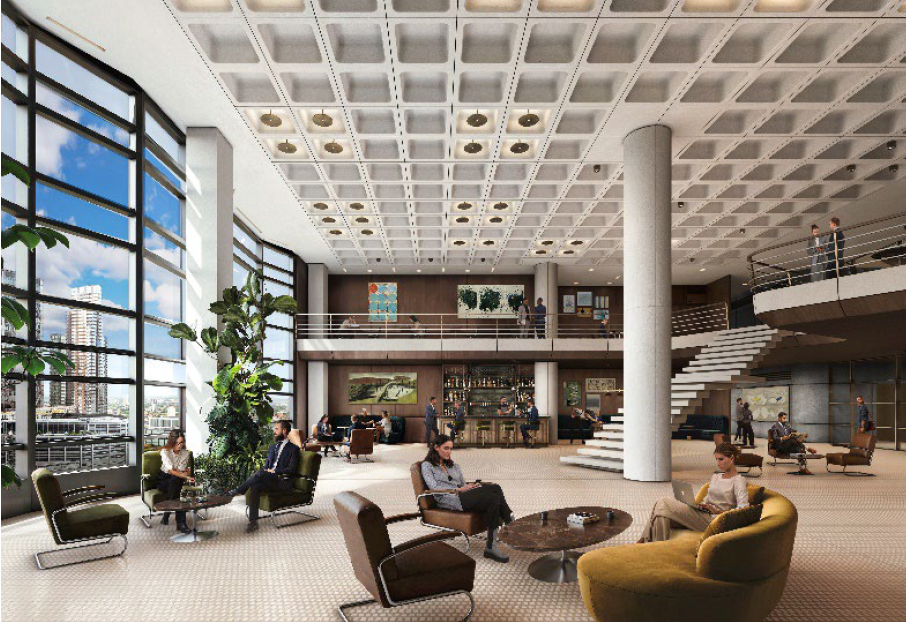
The office is no longer simply somewhere to sit and work. Today’s workforce seeks collaboration, community, wellbeing, flexibility and purpose. Employees want social spaces, quiet spaces, green terraces, gyms, healthy air, good acoustics, seamless technology and, perhaps most importantly, somewhere worth the commute.
Alongside this came a strong emphasis on retrofit, circularity and adaptability. More than half of recent planning applications have been retrofit schemes, highlighting that long-life buildings, circular construction and embodied carbon are the new normal.
AHMM’s Simon Allford then offered a beautifully simple observation: architecture provides the stage set for life’s theatre.
Buildings are not merely objects but backdrops for the countless activities that unfold around them. As he noted, most people will never enter our buildings, but they will walk past them, experience them and form opinions on them, often brutally and without invitation.
Drawing connections between London, Rome and decades of urban development, Simon spoke about the routes, connections and public spaces that bind cities together. Buildings matter, but what happens between them often matters even more.
One thought resonated with me: the long-term role of a building is to become a “delightful container for unknown uses”.
History is full of buildings that have endured because they possess good bones, generous proportions and the capacity to evolve. Their function changes while the architecture remains.
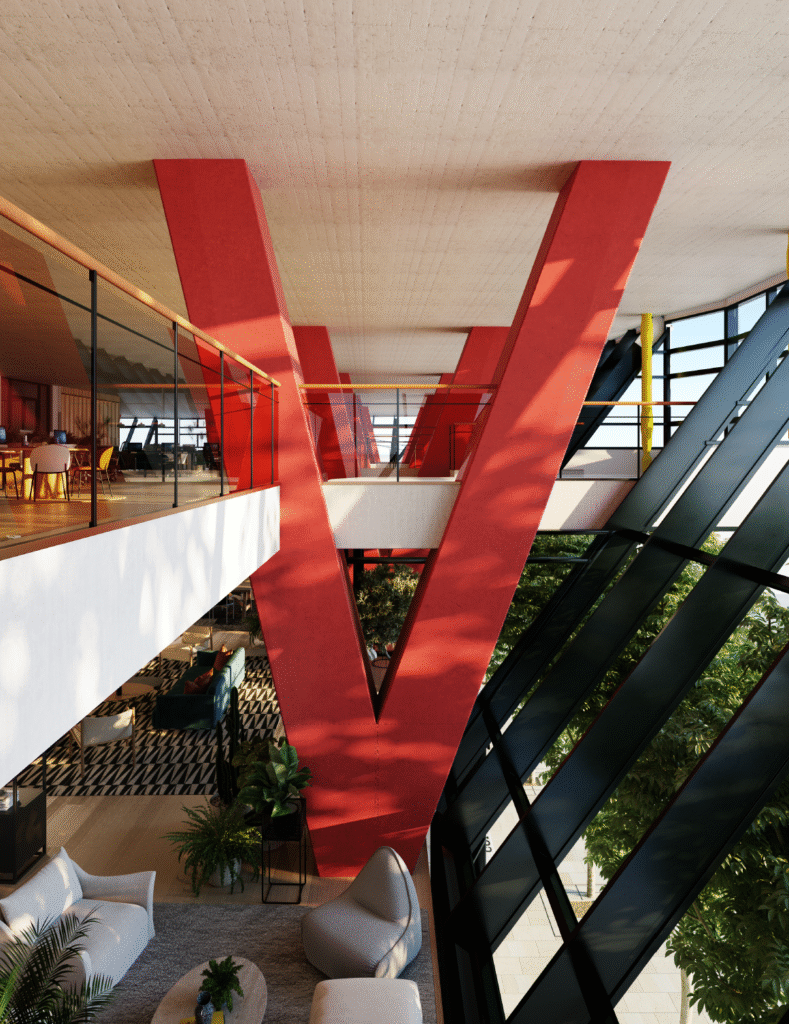
The final presentation brought these themes into sharper commercial focus. David Marks, CEO of Brockton Everlast shared a developer’s perspective through The Dovetail Building, its forthcoming office development in the City now under construction.
In an enjoyable analogy, City buildings were compared to cocktails. Dovetail, we were told, is less pint-in-a-crowded-pub and more carefully crafted Bloody Mary enjoyed from the corner seat of a cocktail bar.
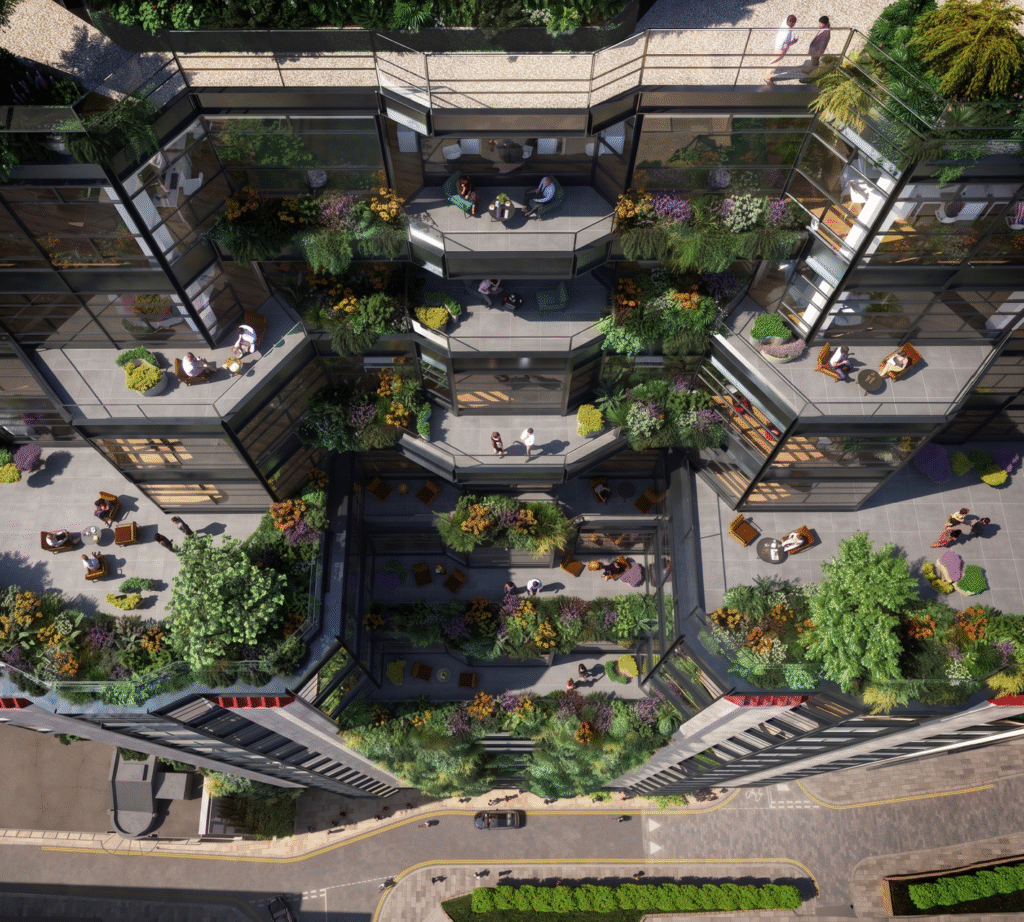
The project is driven by a belief that future offices must embrace what technology cannot replace: human interaction. While workplace discussions often now focus on AI and efficiency, Dovetail centres itself on culture and community. Green space, social interaction, curated retail, active streets and stronger connections to the wider city are all considered part of the workplace proposition, echoing many of the themes Joanna had introduced earlier in the evening.
Perhaps most refreshingly, Brockton discussed retail not as a rental line on a spreadsheet but as a placemaking tool. By reducing the pressure to achieve top-market retail rents, the project creates opportunities to curate services that genuinely enhance the experience of occupiers. The goal is not necessarily a globally recognised brand, but perhaps the perfect florist, coffee shop or sushi counter that contributes character and community.
Reflecting on the evening afterwards, I found myself coming back to the cocktail analogy.
At first, David led us to believe a building is the cocktail itself: a carefully mixed combination of ingredients, each chosen to create a particular experience. But Simon’s comments made me think that perhaps buildings are the glass, while the occupiers, activities and uses are the ingredients.
The contents can change over time. But a well-designed building should remain useful regardless of what’s poured into it.
The challenge comes when we design the architectural equivalent of a martini glass: beautiful, distinctive and perfectly suited to a particular moment, but less adaptable when tastes change.
That leaves me with a few questions for you to considered over an ice-cold cocktail of choice: Can we design buildings for uses we can’t yet predict? Can we meet ambitious carbon targets while making sure buildings are flexible enough to evolve? Can we justify the cost of investing in adaptability today for needs that may not emerge for decades?
All of the evening’s speakers approached the future office from different angles, yet landed in a similar place. Great workplaces are no longer defined by desk densities or floorplates alone. They’re defined by their ability to support people, contribute to the city and adapt over time.
So for me, the real question isn’t what cocktail we’re designing today, but whether we’re creating a glass that will still be useful tomorrow. Because if we’re serious about sustainability and longevity, future generations should be free to mix their own cocktail.
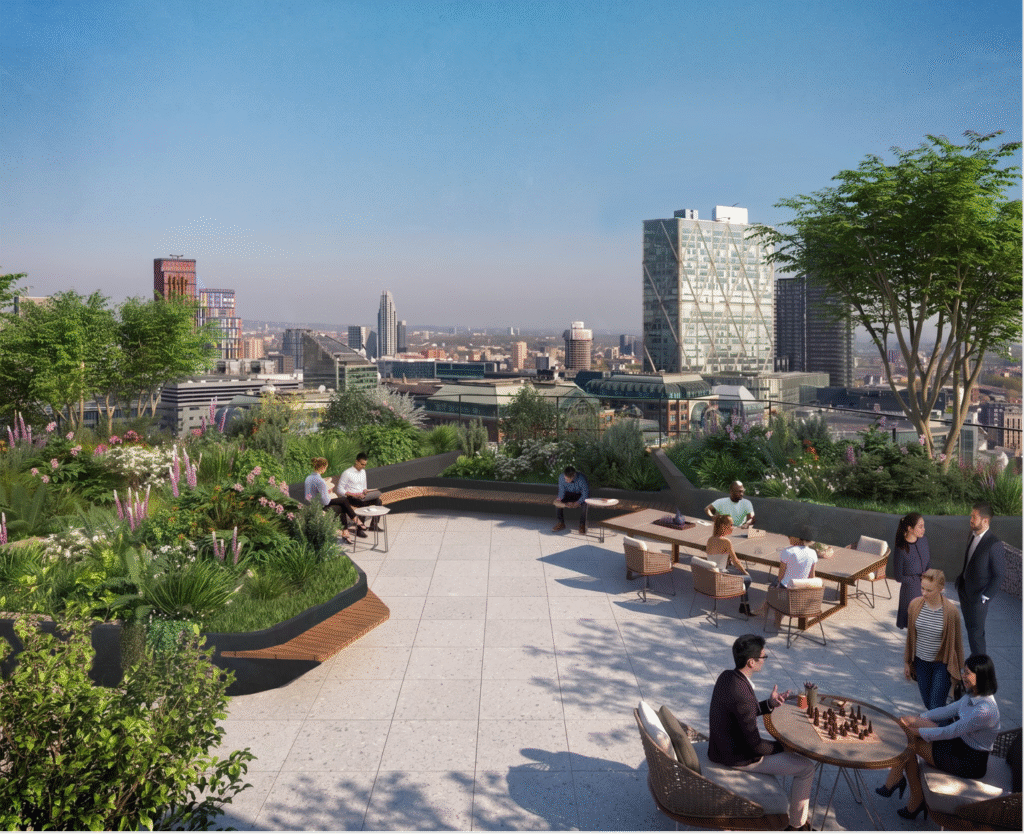
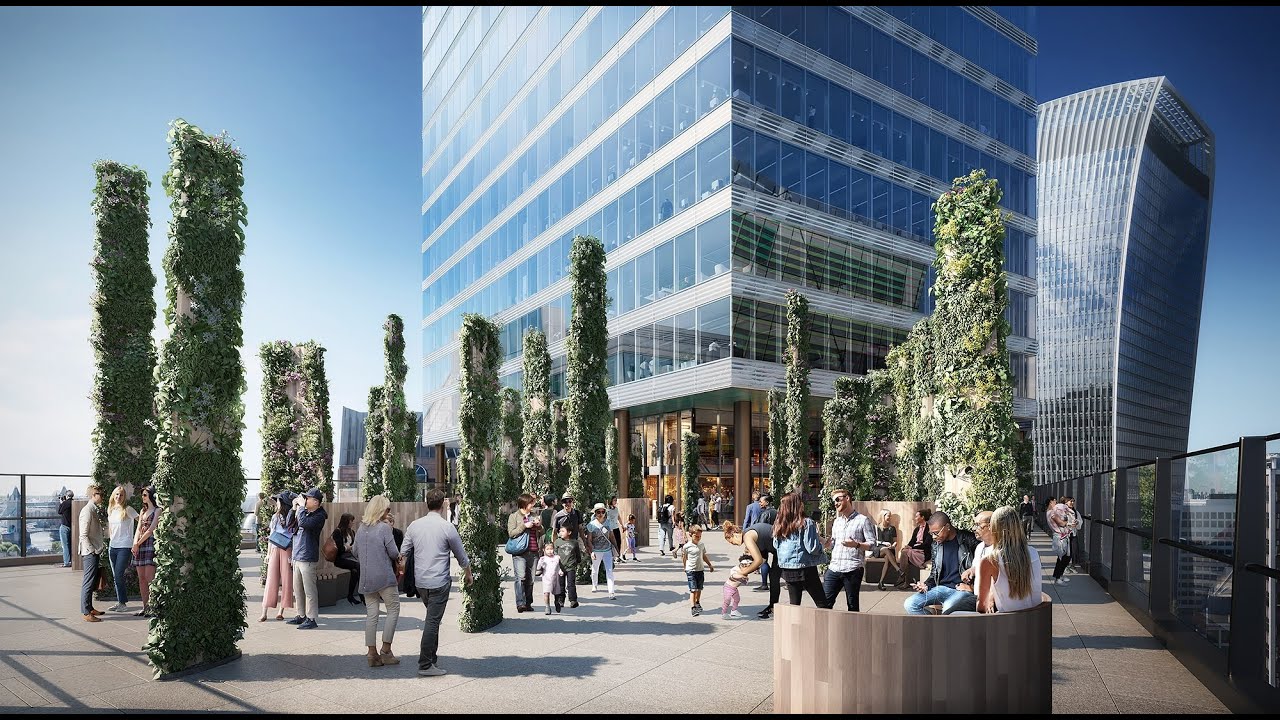
Eric Parry RA – 50 Fenchurch Street Tuesday, 16 June 2020 50 Fenchurch Street is an exciting new City of London development proposed by The Clothworkers’ Company. Eric Parry RA (Eric Parry Architects) discuss’ the scheme, which includes a new office building, Livery Hall for The Clothworkers’ Company, public roof...

Wednesday, 10 May 2023 With less than a month until Practical Completion and with the building still a hive of finishing and commissioning activities the CAF were privileged to be given a tour of 8 Bishopsgate by Ollie Tyler of Wilkinson Eyre. Mitsubishi’s latest addition to the London skyline is...
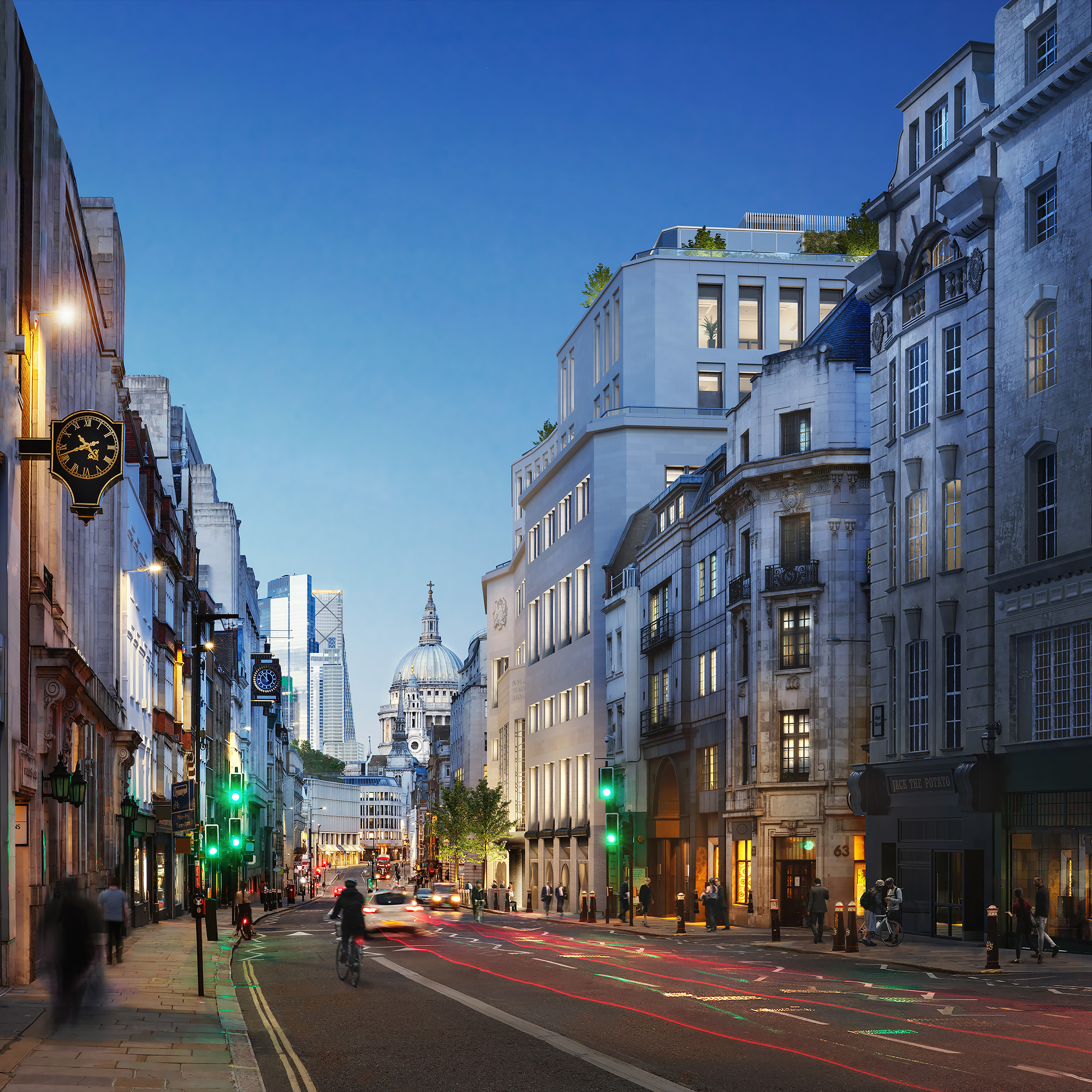
Tuesday, 12 September 2023 City Architecture Forum members were treated to a preview of the City Corporation’s new court complex at its Salisbury Square Development on Fleet Street by Lee Higson, director, Eric Parry Architects, and Tim Cutter, director, Avison Young (City of London). If you think a major city...