

Thursday, 8 September 2022
I joined the tour of the of the Leathersellers' Hall as a learning opportunity. I am an architect and I am always keen to visit good architecture and expand my pool of references.
“The Leathersellers’ Company has occupied this site continuously since 1543. Whilst earlier halls were located within St Helen’s Place, the new 7th hall has now returned to the site of its earliest historical location.” The Leathersellers’ Company is thought to have its origins amongst the whittawyers (makers of fine white leather) and pouchmakers who congregated along London Wall in the early thirteenth century. By 1444 the Leathersellers’ were sufficiently organised and powerful to apply to Henry VI for a charter of incorporation. The house of the company has been redesigned with its rich history in mind.
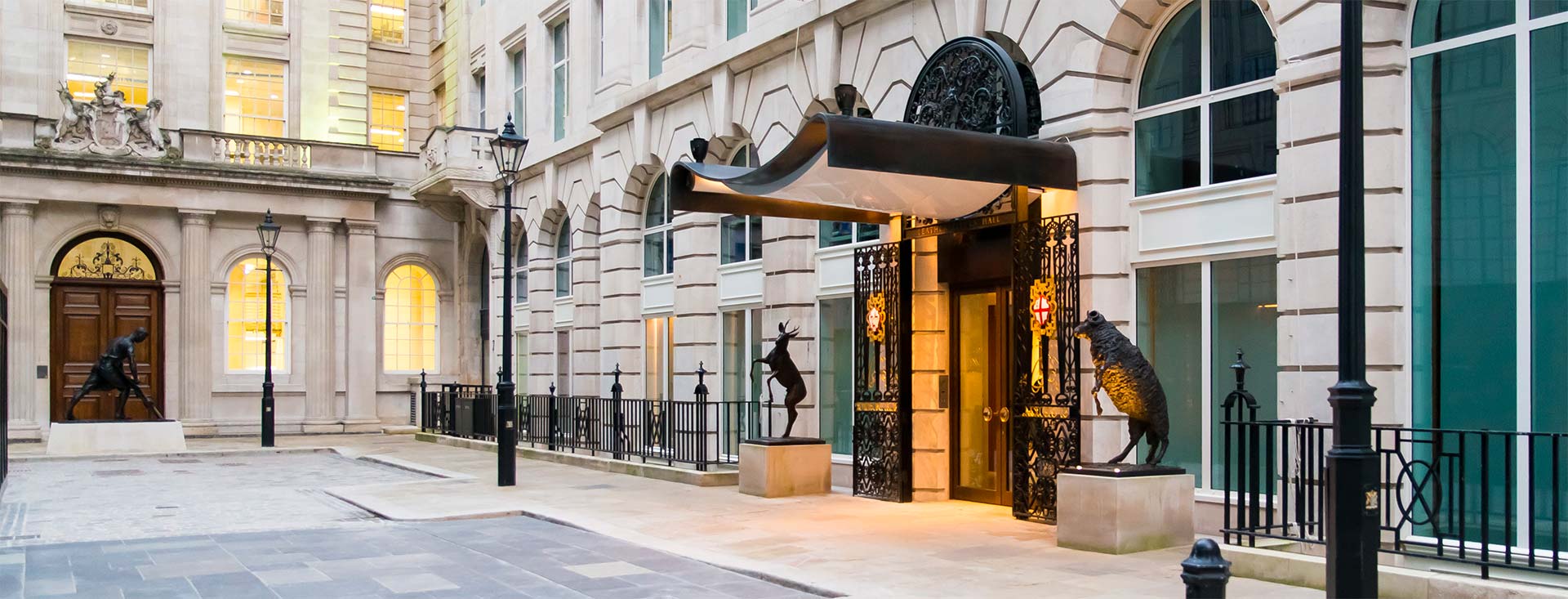
The entrance to this address is signalled by a draped bronze canopy and magnificent wrought-iron gates.

Our visit started from the reception room - a room that orbits around a sculptural chandelier designed by the American artist Dale Chihuly.
This room is about light. One of the walls is fully glazed with a curtain veiling the cathedral next door. The masonry wall of the church becomes part of the room, tainting the light of a warmer tone. The room is an essay about light and reflection, delivered using lacquered wood. Subtle colour differences varying tints of white and grey. Cracked and smooth lacquered panels make up for the envelope of this room. Walls are thick.
They are hosting air handling units and all the services necessary to a functional space.
The room serves the adjacent board room. A walnut room warm but still bright. Through the vision glass above the doors, you can appreciate the transition between the two worlds. Walnut panels chandeliers and soft carpet characterize this second room.
Trophies on the wall such as the original statutes of incorporation. Extraordinary artefacts within bespoke niches are wonderfully crafted and very well curated to make the point about the importance of the leather trade in history. A bright generous vestibule hosts the start of the descending journey. Like a museum room, with an extraordinary self-supporting spiral staircase. Walking downstairs offers an extremely dynamic experience, the view is always comforted by an accurate selection of finishes. Calm, elegant, sound absorbing, warm textures to soften and compliment the architecture.

We stepped in the bathrooms, which have been designed with elegance and good manners in mind.
The final room that we visited was the actual dining hall which can seat up to 120 people at dinners. This room is also covered in American walnut panels. The main feature of this large room is the tapestry hanging along the upper part of three of its walls. It is forty metres long and contains a wealth of interesting images and allusions, all relating to the Leathersellers’ Company.
Fabrizio Cazzulo words and photos
City Architecture Forum member