

Tuesday, 12 September 2023
City Architecture Forum members were treated to a preview of the City Corporation’s new court complex at its Salisbury Square Development on Fleet Street by Lee Higson, director, Eric Parry Architects, and Tim Cutter, director, Avison Young (City of London).
If you think a major city office building is complex, try combining eight crown courts, five magistrates’ courts, and five civil courts in one building, while simultaneously delivering a new linked police headquarters and a speculative office building, within a new public realm.
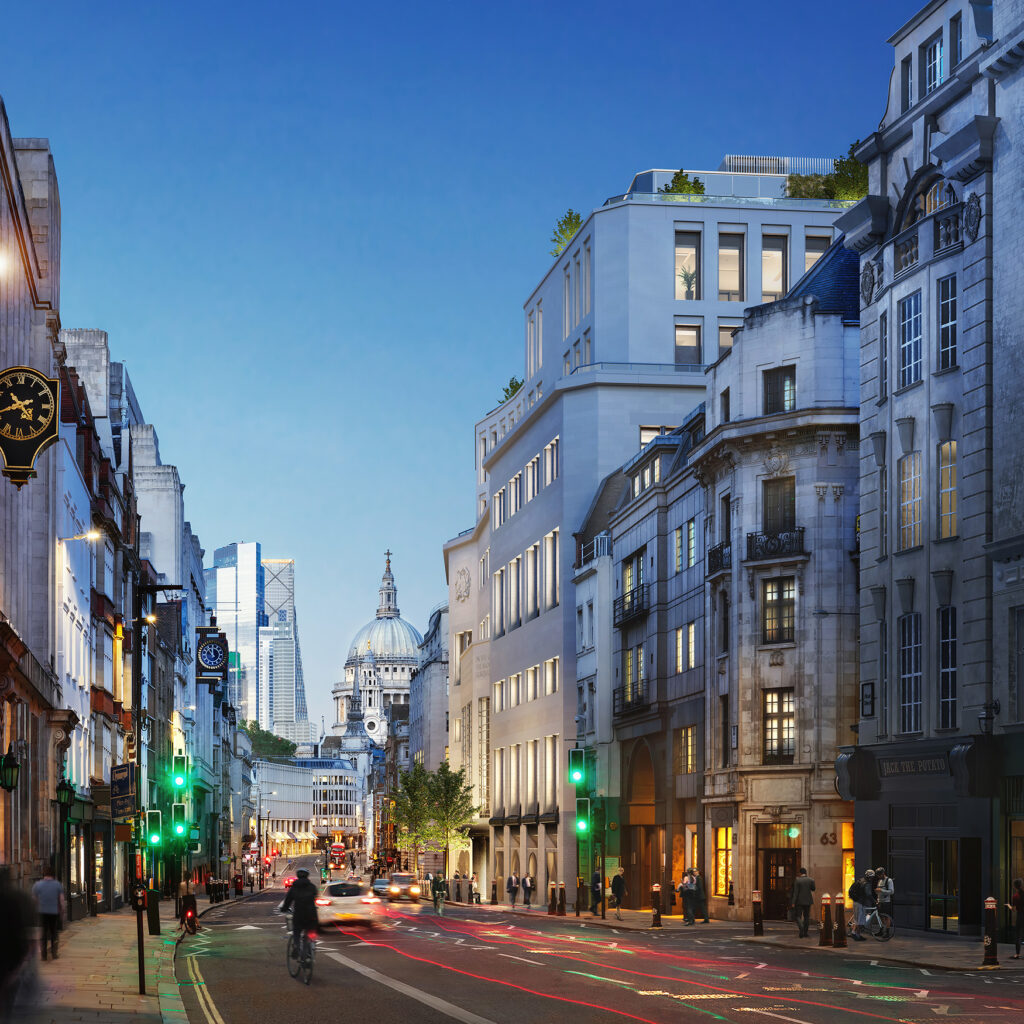
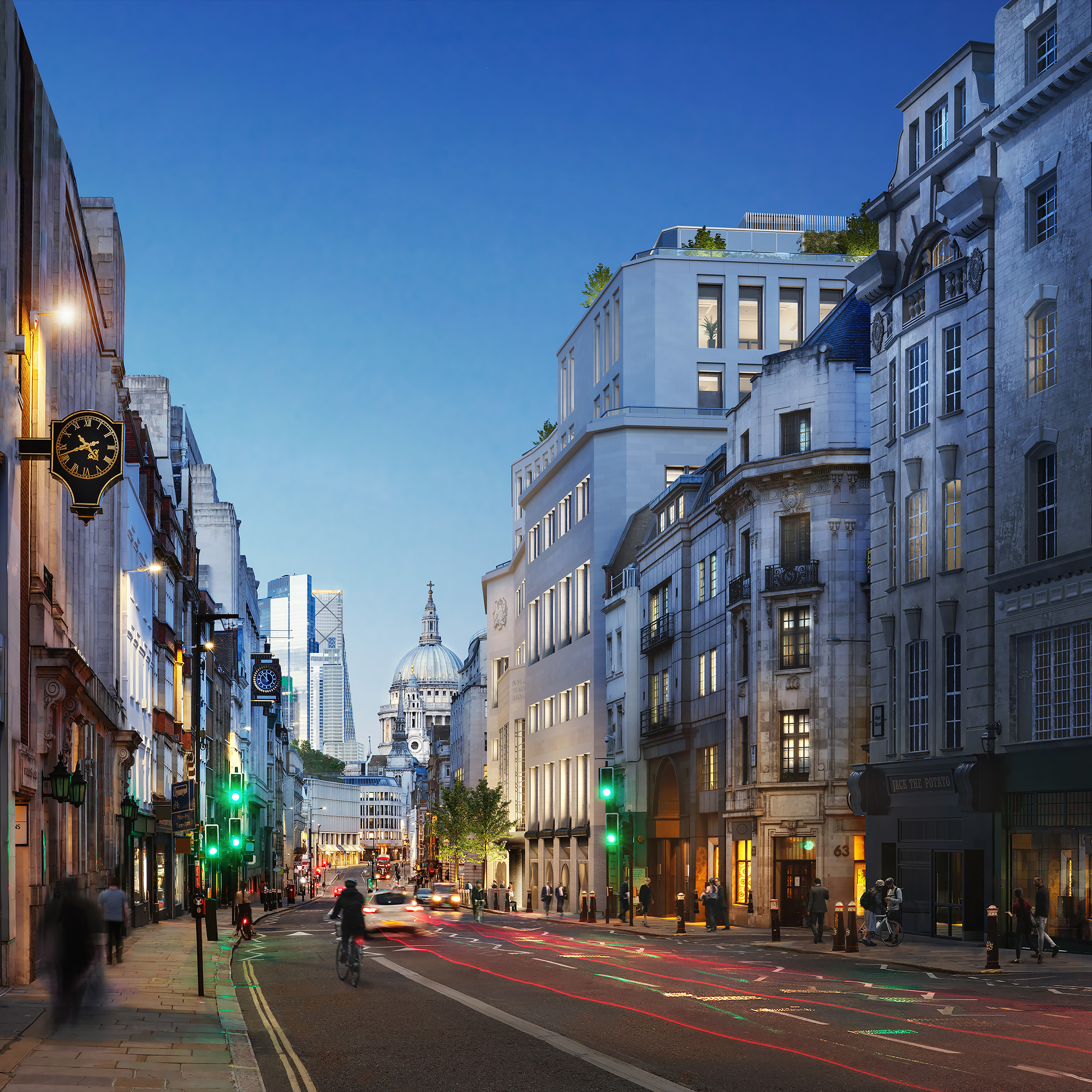
Now under construction, this is the Corporation’s ‘gift to the nation’ a flagship ‘Court of the Future’ specialising in cyber-crime, with an innovative spatial arrangement that improves the operational efficiency of courtrooms, increasing the number of cases can be heard when compared to a traditional court.
The new Court building, fronting Fleet Street, will be the frontispiece of the Salisbury Square Development, lying between the home of England’s legal professions in the Inns of Court and Royal Courts of Justice to the west and the Old Bailey to the east. It will bolster the City’s global status which rests on the UK’s rule of law and timely justice.
A new City of London police will sit south on Whitefriars Street, overlooking a new Salisbury Square to the east. The City police is also the national force dealing with economic crime. It will consolidate the police estate enabling re-use of the Grade II*-listed Wood Street and Grade II-listed Snow Hill stations. Southernmost on Whitefriars is a new office development completing the city block.
Existing buildings are unloved offices from earlier eras - with one exception - the Grade II-Listed 2-7 Salisbury Court, where the first edition of The Times was published in 1822, to be retained as a pub, also overlooking Salisbury Square and Salisbury Court.
Eric Parry Architects’ task, said director Lee Higson presenting the scheme, was to accommodate a hierarchy of 18 new courts. These are of diminishing scale rising up through the building, threading between them circulation, a spaghetti of lifts and stairs that physically separate the various parties to all actions. Criminal defendants in custody brought up from basement cells below, civil litigants, judges, juries, lawyers and the visiting public, all must be kept apart, while meeting safety and highest level security requirements. Judges, barristers and other functionaries have suites above the courts and a nice roof garden.
The three buildings will be separated by two east west walks between Whitefriars Street and Salisbury Square, continuing east to St Bride’s Church. All three buildings enclose on three sides the reimagined square, with entrances at ground level off it. Three levels of basement lie beneath, linking the police and the Court building.
Durable stone facades are used for the impressive Court building and weathering steel for the police to last a minimum of 125 years, and perhaps convey something of their respective civic duties.
Pale stone for the Court’s substantial Fleet Street façade adds dignity to London’s main ceremonial thoroughfare, projected by the symmetry of its two splayed outer wings and central entrance bay. Also by the classical layering and prominent judicial insignia high above a deep set portico leading to the main public entrance and three-storey lobby within.
The main façade’s composition and materiality counterpoints its civic function with the neighbouring media pretensions of an earlier era - sober ex-Reuters next door and exuberant ex-Telegraph and Express buildings opposite, all listed.
The office building will be clad in a rich earthy colours, composed of a ruby red terrazzo-effect polished pre-cast concrete, matt, unglazed and glazed terracotta panels and tiles, with inlaid decorative bosses.
Lee Mallett words
Member of City Architecture Forum