


Show & Tell: 75 London Wall – Evolution of a City HQ
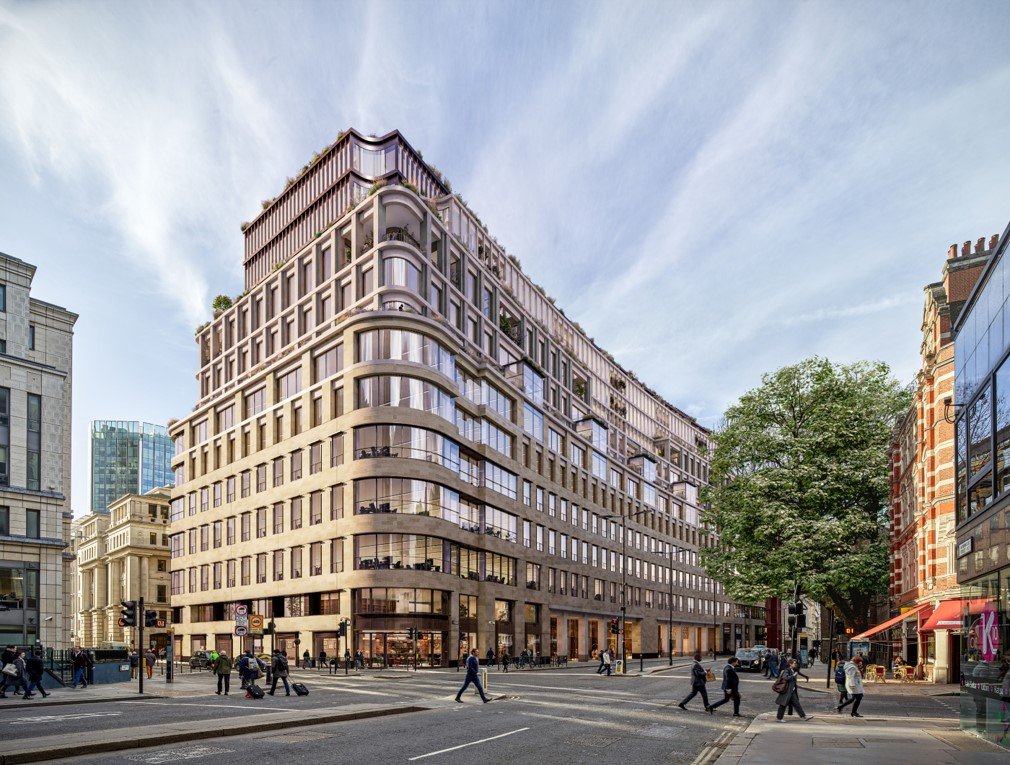
CAF members and guests assembled at Temple Bar to hear about one of the City’s upcoming next-generation workplaces. One that provides 450,000 sqft of grade A office space, whilst retaining almost 90% of the existing structure. The site: 75 London Wall. Henry Richardson of Castleforge Investors outlined the attraction; the prime City location within walking distance of Liverpool St Station, a site surrounded by conservation areas, but not in one, and most uniquely an almost island site, with a party wall on only one side. Initial hope for a tower on the site was quashed by the planners, and a dialogue opened centred around the retention of the existing building, in line with the City’s retrofit-first policy. The existing building is one of significant presence and was designed by David Walker, then of SHCA, in 1998 as the London headquarters of Deutsche Bank. Colin McColl of Orms Architects outlined the practice’s approach to the site, demonstrating an appreciation of the existing building and of the surrounding context. Colin described the City context and how the practice had studied the traditional stone buildings that are characteristic of much of the Square mile. Slides shared with the audience showed an analysis of classical order and proportion; the base, middle and upper layers of buildings, overall composition, symmetry, depth and rhythm of facades, as well as how corners are turned and expressed. The practice applied the same analysis to the existing building, which was composed with its own set of rules. The challenge then was how to ‘grow the architecture’, or as the structural engineer is said to have observed, how to put a building on top of another one! This posed an architectural challenge and the proportion and order needed to be addressed. The trick was to extend the base of the building upwards to add a transitional level before setting back the massing of the additional floors above. Along London Wall a series of glass box oriel windows, a feature of the existing building, are rebuilt at this transitional level and interlaced with the extended floors above. Matt Reid of Castleforge described how the extended architecture provided a mix of outdoor terraces, some inset and covered, some open and some inside-outside spaces formed by projecting bays. One can see how the existing building helped to create these opportunities for variation of aspect and is set to provide a much richer user experience than perhaps would have been developed with a new build. The importance of outside space was not underestimated and inset pocket terraces were added to the existing building, to provide this amenity to almost every level, even to the large trading floors to the lower levels. Much of the existing building is proposed to be retained and recognisable as what it once was, with a few adaptions, most notably with the external articulation of the building, not as one but as two along London Wall. Inside, the building remains as one connected floorplate above ground level. It’s less honest, but in townscape terms the re-balancing of the building works and is to the benefit of the overall composition. The decision to define the entrance as a double height portico with double height glazed windows and a big welcoming space brings the building up to date and replaces the previously more defensive entrance of the 90s, which was born out of a different time (the previous building on the site suffered from the IRA Bishopsgate bombing in 1993). The entrance itself is generous and has been planned to split in two if required for an anchor tenant. The original central core is split in two, and the proposal keeps this basic plan, and a level of adaptability for leasing. Orms noted how the building is clad in a warm limestone, uncharacteristic of historic City buildings but nevertheless with its own inherent quality and warmth. Much of the stone façade was kept and where altered, re-used on the building extension. Orms described the careful categorisation of building materials and components as a forensic exercise, looking wherever possible for opportunities to re-use what the existing building could give. The experience shared was that the challenge of re-use is difficult and sometimes the commercial and carbon realities, once for example transport is considered, make best efforts unviable. However, much has been achieved, and suppliers take back schemes for ceiling tiles, stone and glass are to be utilised. Where materials or fittings can’t be re-used new homes are to be sourced in other projects or sent to local re-use marketplaces. The building was formed through numerous discussions at pre-application stage with the City of London planning department, who challenged on height, the conservation area settings and the public space offering. Discussions with the planning department manifested in a new pedestrian route through the building aligned to another existing alleyway to the south of the building. The route will stitch the building into the existing City fabric and create additional permeability through an otherwise long façade along London Wall. An external public space, described by Orms as an outdoor room, lies to the sheltered south side of the building away from the main road and at the base of the building, covered from the elements by the building above. Fully accessible and adjacent to an internal auditorium which is planned to be open to the public run by a cultural partner, the space can also be used by the tenants of the office space, with management around operational hours of use. With planning granted under delegated powers in 2024 work has begun on site. Due for completion in 2028, the building reportedly on time and on budget, with an impressive list of green credentials the building will be launching straight into a market where demand is high for top quality office space. The years of careful planning should surely deliver to those who have invested in the building’s development. The evolution of this City HQ should bring about a new chapter for this […]
1 Poultry: retrofit as the new benchmark
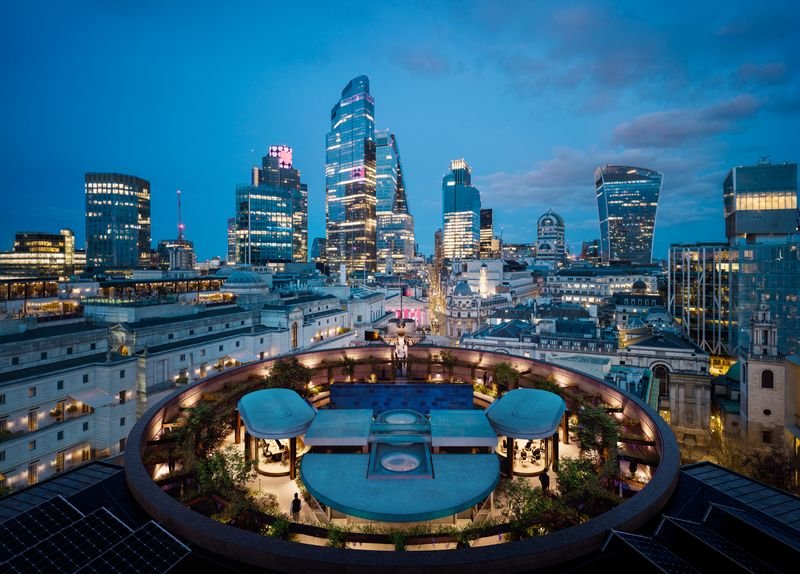
The recent CAF tour of 1 Poultry with Fore and MORE was a masterclass in what serious reuse looks like. James Stirling’s Grade II * listed 1997 landmark is being reimagined rather than replaced — and the numbers tell the story: EPC G to EPC A, BREEAM Outstanding, and NABERS 5* targeted, embodied carbon down to less than 250 kgCO2e/m2 GIA, 83% reduction in energy use intensity, 50% reduction in water consumption, and 100% electric powered by renewables, all while keeping Stirling’s original building intact and focussing on qualitative improvements led by a minimum interventions strategy.
The Evolving City – architecture in the Square Mile 2012-2026
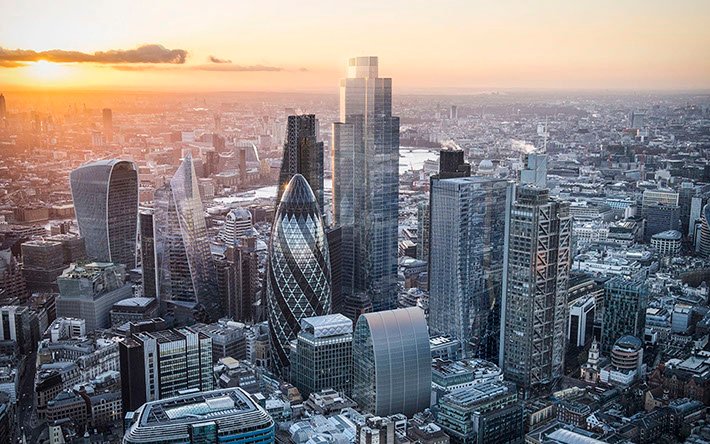
CAF is producing a book to celebrate its 35th anniversary that will be published in February 2027. The Evolving City – architecture in the Square Mile 2012-2026- will be a high-quality hardback, a study of the Square Mile at the opening of a new era, reflecting the ambitions of the new City Plan 2040 to enhance the City’s role and its appeal to all. Our book and the new City Plan come at a time when record new planning applications are being received by the City Corporation’s planning team. The book will record c.100 significant projects developed between 2012 and 2026 and consider in an essay by a leading architecture critic, how the City’s architecture and urbanism has evolved to meet new challenges. It will include forewords and commentary from leading City Corporation politicians and officers, with essays looking at aspects of the City’s transformation since 2012 and at what the future holds, as well as the symbiotic relationship between its unique heritage and the need for growth and evolution. The Evolving City will be a lasting record of yet another era of dramatic transformation, demonstrating the City’s ability to keep improving to meet the challenges of the forces shaping its future. We are grateful to the City Corporation for its seed-funding contribution towards the costs of the producing the book, which we are delighted to say has encouraged a sufficient level of generous sponsorship from the City’s built environment community for us to produce a book that CAF can be proud of. The book is intended be used by the Corporation’s politicians and officers as a promotional guide at international exhibitions such as MIPIM and as an ambassadorial gift on overseas visits by the Lord Mayor and others, and by sponsors as promotional material for what they have to offer. It is being edited and produced by CAF committee member Lee Mallett (a former editor of Estates Times and Building Design) and independent production editor James Pallister who was involved in the previous edition, produced in 2012 for CAF’s 20th anniversary. Richard Saxon, who led the 2012 publication, is responsible for identifying the projects to include this time. Sponsorship opportunities are still available and those interested should contact CAF chair, Andrew Reynolds on andrewj.reynolds@btinternet.com A free copy will be made available to each CAF member, and single or multiple copies will be available to buy following the official launch in February.
Stage-set for a cocktail of users
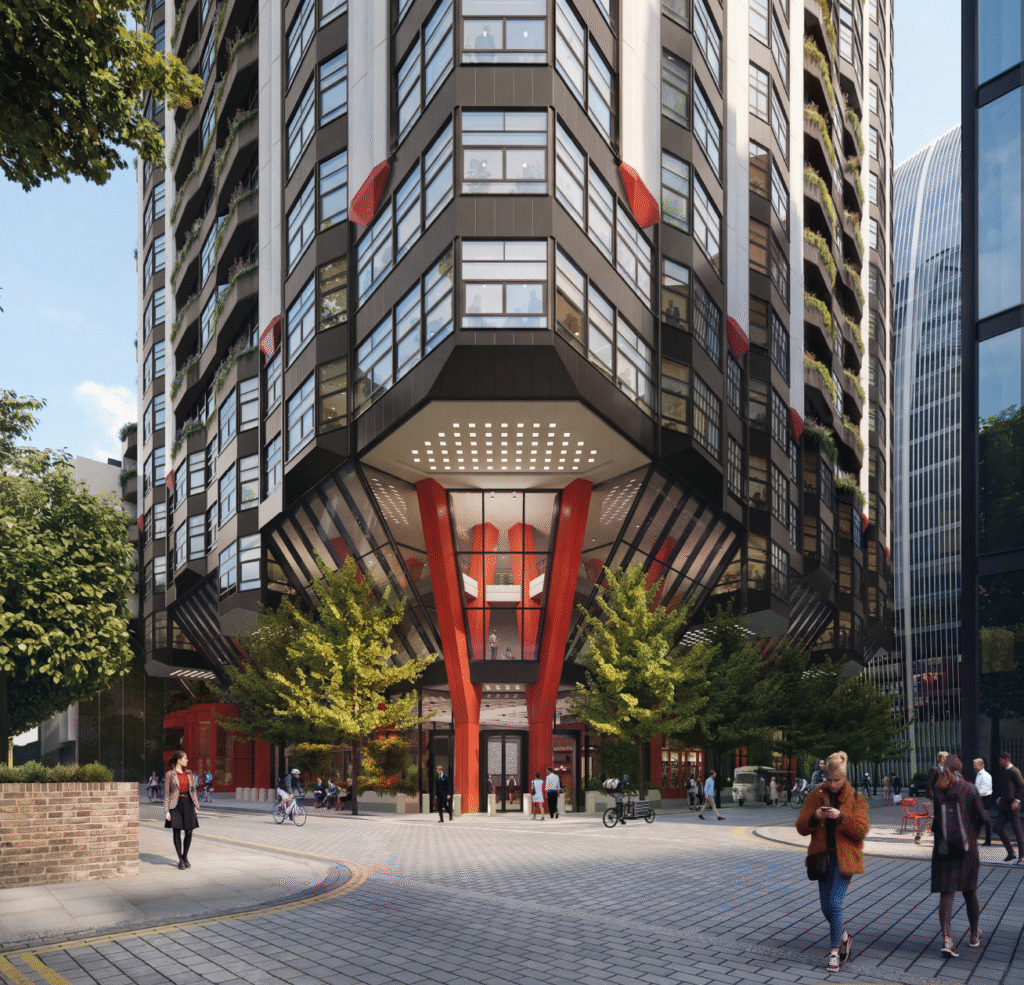
What’s a CAF event without cocktails and canapés? Thankfully, this one didn’t disappoint.
An evening at AHMM’s Clerkenwell studio, looking at the future of offices and in particular, Brockton Everlast’s The Dovetail building in Houndsditch, brought together three distinct perspectives on the workplace of tomorrow: the planner, the architect and the developer.
Something in the City – a model for mayors everywhere
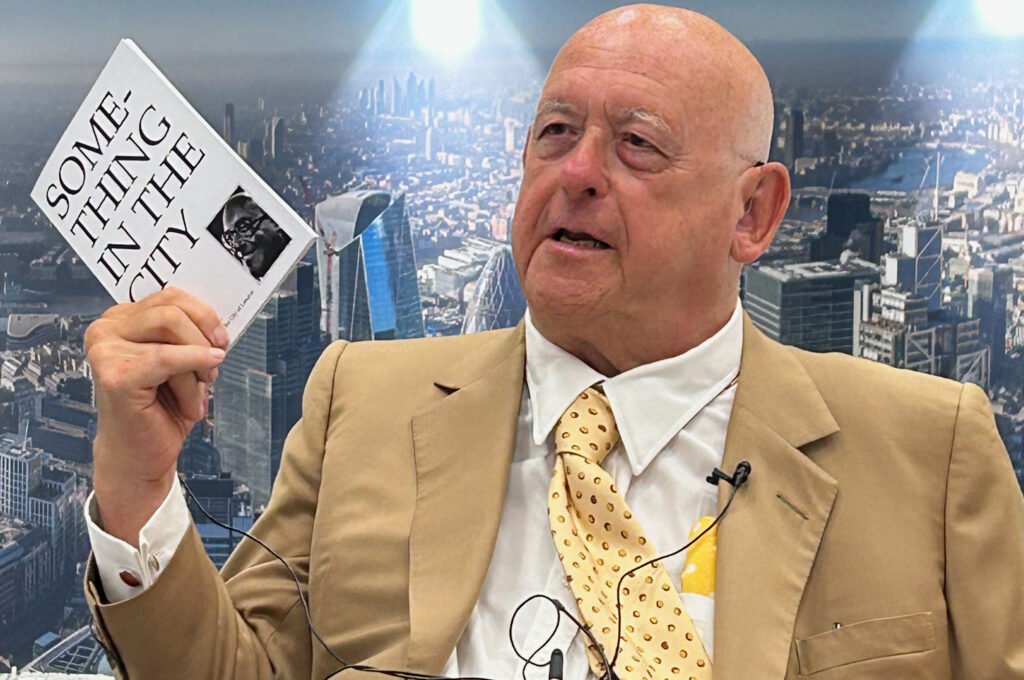
Something in the City – CAF’s founder Michael Cassidy, CBE, with his new memoir, celebrating the Forum’s 35th anniversary Had Michael Cassidy been Mayor of London rather than ‘Something in the City’, we might now be living in a different city. This became clear at the City Architecture Forum’s sold-out inaugural summer party last week celebrating its 35th anniversary, held at The London Centre, which kicked off with a ‘Conversazione’ with Cassidy, chaired by CAF committee member Lee Mallett. Cassidy’s ability to seize the day, push through new policy, and simply lead effectively, left its mark not only on the City of London, transformed on his watch, but on many of the capital’s major urban projects in the last 44 years, including Wembley Stadium, the Millennium Bridge, Crossrail, each of which he had a hand in. As founder of the Forum in 1991, Michael established an organisation which, he reminded CAF members; ‘Firstly, is not a campaign. And secondly is self-educating, involving building visits and debates, and therefore is not partisan in any sense.’ CAF was founded in the sustained aftermath of the Prince of Wales’ highly critical intervention over the redevelopment of Paternoster Square when he made the claim that post-war development had caused greater damage than ‘the Luftwaffe’. The Prince also criticised the new wave of Big Bang-related development in the City, unleashed five years earlier by a new City Plan, and the ensuing public spat between ‘classical’ and ‘modern’ approaches to contemporary architecture became known as ‘Style Wars’. Cassidy had personally driven that new plan through the City’s somewhat hide-bound civic culture, forearmed with the knowledge of what Big Bang was likely to require of the City’s built environment. So it proved. The five years between 1986’s Big Bang and the disappointment of the early 90s recession, saw an unprecedented third of the City redeveloped under the City Plan’s aegis. Cassidy felt the Forum would be a (studiously impartial!) way of improving the quality and understanding of what was required of architecture in the new era, driven by a new focus on occupiers’ needs which featured prominently in the Forum’s early roundtable dinners which he chaired. Michael’s vision was, however, utterly different from what the Prince had in mind. In a meeting with Charles and his advisers, Michael (alongside his appointee Peter Rees as City Planner) recalled the Prince pulling from a drawer The Royal Academy’s 1942 plan for the City. This initiative was led by Sir Edwin Lutyens with other RA architect members, with neo-classical buildings lining Hausmann-style boulevards – totally contradicting the City’s medieval street patterns and the needs of the City’s new occupiers. In the circumstances not many politicians would have – as Cassidy subsequently did – invite the Prince of Wales to speak at the annual Planning & Transportation Committee dinner in Mansion House. A tactic he maintains ensured the Prince was ‘inside the tent looking out’ where he might cause less damage. As the years passed and developers found inspiration in a new cohort of contemporary architects, buildings ‘of much greater quality’ with greater emphasis on occupiers’ needs were developed. Charles’ influence, and that of ‘Style Wars’, faded. To achieve his vision, Cassidy told CAF members he had tolerated absolutely ‘no internal political opposition’ to the new City Plan’s ambitions. He quashed any that arose with the threat of Canary Wharf, whose initial proposer, larger-than-life Texan developer G Ware Travelstead made no bones in telling City grandees: ‘I’m going to be taking all the banks I can from you guys, and I’m going to build Wall Street-on-water.’ It was a threat that, like the Prince’s intervention, was eventually to fade, and become more of a peaceful, complimentary, co-existence as the City more than rose to the Wharf’s challenge. Cassidy said ‘it warms my heart’ to see the likes of HSBC and a key legal practice returning to the City. Other existential threats were also vanquished. He persuaded Tony Blair and New Labour for example to remove the long-standing manifesto threat to abolish the Corporation. And to promote new legalisation to amend the City’s constitution to create a business vote (‘draining the swamp’ as Cassidy put it). London’s boroughs were also wooed with money from the City’s coffers, earning the Corporation more of a welcome in greater London. In Q&As, a stalwart Cassidy did not hesitate to take up the cudgels again to counter today’s threats. He condemned MCHLG Minister for Housing and Planning, Matthew Pennycook’s recent bombshell instruction to the City to stall adoption of City Plan 2040 and re-examine the impact of tall buildings on the Tower of London – a long running battle between the heritage lobby and the Corporation. ‘I was responsible for reforms that in the modern age have produced buildings of fantastic architectural quality, in volumes that have attracted big players from around the world. It is vital for the future growth of this country that the City is allowed to continue that process,’ said Cassidy. ‘And for this junior minister to stop the progress of our next plan (City Plan 2040), by insisting on re-opening a matter we thought settled, has to be tackled. We’ve got to come out strongly and have this reversed because I think it is a bad mistake by this Government.’ Concluding Cassidy also launched a new personal memoir as a part of CAF’s anniversary celebrations. Titled Something in the City this reflects on aspects of his life and times as the City’s leading politician during its most transformative post-war era. Part of the 1942 Royal Academy’s plan for post-war London, led by Sir Edwin Lutyens and other architect members of the RA Photos – Kreative Barn
City Architecture Forum – Mid Year Review 2026

For those who are unaware, this year marks the 35th anniversary of the City Architecture Forum. This is, of course, a significant milestone and is not only a mark of how well the Forum has endured but also how well it is regarded by both members and guests. This doesn’t mean we have been complacent, indeed, the ever changing environment that is at the heart of our organisation – the City of London itself – almost obliges us to stay fresh and relevant to embrace the ebbs and flows of economics, politics and development, and the associated changes in the property and construction industry. So, what has happened since our Chairman, Andrew Reynolds, provided the last members’ update at the end of 2025? I’m pleased to say we have made excellent progress with several new initiatives – all as part of what we have dubbed ‘CAF 2.0’ – principally developing a wider range of events (talks, tours and site visits) than ever before, a new website that we hope you are experiencing as a substantially better resource, more user friendly and accessible, making applications for events and membership so much more straightforward. I am writing this not long after having joined members and Gwyn Richards (Planning and Development Director) and Tom Nancollas (Assistant Director, Design) of the City Of London Corporation on a walk jointly organised to explore recently completed and upcoming projects in the Holborn and Fleet Valley area of the City (roughly the area bounded by Chancery lane, Holborn, Farringdon Street and Fleet Street), an event which I feel perfectly captures the spirit and essence of the Forum in its newest guise – a collaborative, inclusive fraternity which offers exclusive insights into the best of the City’s architecture presented by key figures invested in its development, and responsible for its stewardship. The positive influence of Jenny Adler-Potts, our Operations Director, and indeed a number of our Committee members, has helped to promote this change and I would encourage you to watch this space for news of upcoming future initiatives, events and activities, with the CAF Annual Dinner 2026 at the Chartered Accountants’ Hall, in Moorgate Place, on Wednesday 11 November as the stand out function in this anniversary year! In the last 6 months we have also launched the Conversazione (In Conversation With) series, the first being compered by Lee Mallett. The idea of this is to invite key figures in our industry to join us for drinks and dinner and a Michael Parkinson (the older generation will know who he is) or Graham Norton (for today’s viewers) style interview/fire side chat to hear their stories, reflections on the City, and their hopes and aspirations for its future in a more intimate and convivial setting. First guest was the renowned journalist and industry commentator, Paul Finch, who had us transfixed with stories of his own beginnings, his love of and involvement with the world of architecture, and his varied activities today. To mark our anniversary, we will be following this up with the rapidly approaching first ever CAF Summer Cocktail Party on 8 July, to be preceded directly by the next Conversazione, which will be – appropriately – with Michael Cassidy, the founding force behind the City Architecture Forum, who has of course enjoyed a long association and involvement with the City, and brought so much that is positive to it. We look forward to the prospect of seeing you there. The next 6 months will be a very busy period for CAF Committee members, who will be preparing a special publication to mark our anniversary. A lot of hard work is going into its design and content, into developing themes and topics with contributors and the editorial team and, of course, securing the necessary sponsorship to make it all happen. It promises to be a worthy successor to the last anniversary publication by the Forum in 2011, City Architecture: Redesigning the City of London 1991-2011. Our aim is to make this a much admired ‘calling card’ for the City’s representatives travelling the UK and the world, promoting its extraordinary architecture, dynamic and progressive energy. These are exciting times ahead for the City and the City Architecture Forum, and we very much hope you and your guests will continue to enjoy the benefits of membership and the unique offering we have.
Tour de force from City’s Planners
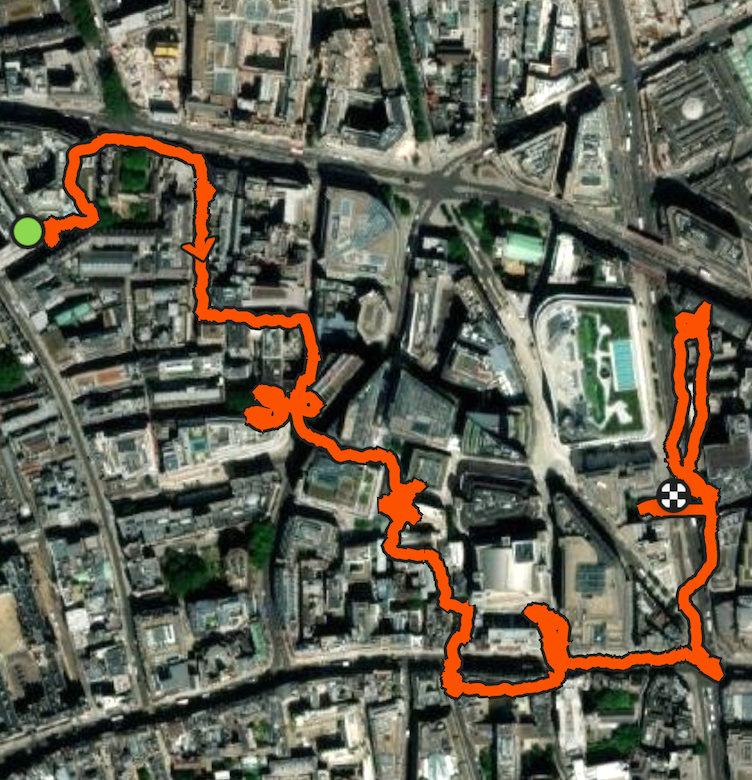
CAF’s inaugural planning tour of the intense development activity around Holborn and the Fleet Valley, led by Planning and Development Director Gwyn Richards with Assistant Director (Design) Tom Nancollas, was a sell-out success, evading rain until the last moment. Weaving south from Make Architects’ Holborn Gate scheme for Hoi Hup Realty, through medieval alleys and courts north of Fleet Street, ending up in the Hoop & Grapes on Farringdon Road for drinks and snacks (part of CO-RE’s Stonecutter Court, by TP Bennett), 40 CAF members were regaled with detailed insights into particular schemes and planning issues in this part of the City. The rich diversity of architecture and uses encountered en route, from preserved pubs to student housing (by Dominus), the new law courts and City police headquarters on Fleet Street (designed by Eric Parry Architects), plus many major new and retrofitted office schemes at various stages of evolution, and the conversion of the 40m-deep The London Tunnels, a unique leisure destination, accessed from Furnival Street, told its own tale of the area’s ongoing reinvigoration. Change and growth in the Fleet Valley, and in Holborn, is being helped by the Elizabeth Line station at Farringdon and a looming shortage of Grade A space across the Square Mile, now prompting record new planning applications. This part of the City is clearly rapidly reinventing itself – finally – after the departure of the newspaper industry nearly three decades ago. Design quality, the need for good growth, and the intended relationship with the City’s surrounding heritage and contemporary functions remain uppermost in the City planning team’s mind when it comes to considering a scheme’s merits. The application of visual technology has also evolved as a powerful tool when it comes to envisaging future development in places like the central cluster and the smaller cluster of the Fleet Valley, which it helped reveal the potential for. What was also clear was our guides’ professionalism, enthusiasm and commitment to the City and its evolution for the better, for which Forum members were grateful. CAF hopes this first walking tour sets a precedent that will further enhance understanding of the City’s built environment for all. Watch this space for future announcements.
Three-into-one at Angel Square
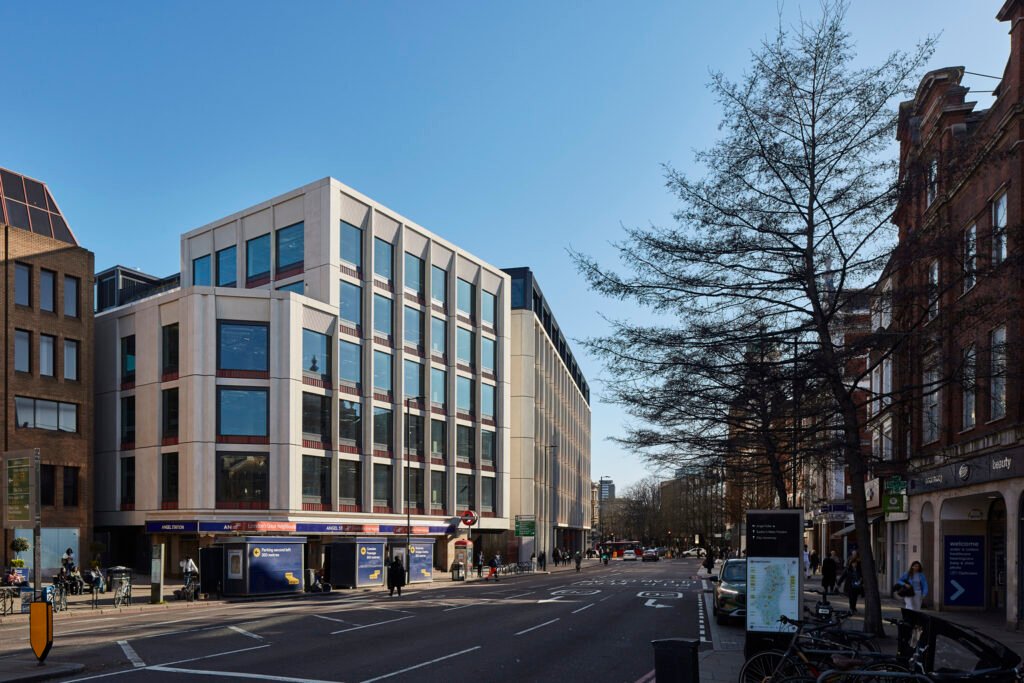
Architect AHMM’s reimagining of Angel Square in Islington for US developer Tishman Speyer has quickly attracted tech and social media tenants since its completion in November 2025. It offers a hotel-like welcome in an elegant, animated lobby that includes a new public café and a more direct visual relationship with Upper Street, benefitting from a glazed facade and 1,000 sq ft of extra pavement to ease congestion at the Angel’s traffic pinch point. Frequency Coffee forms part of the main lobby on a lower half level (see pic) as the site slopes down to City Road and is thriving as CAF members discovered on our recent tour, led by project lead and AHMM associate director, Alex Russell. The 200,000 sq ft scheme offers lessons for other new or refurbished office schemes, perhaps especially those in the City. It has a softer less obviously corporate character (including ambient music) that seems an appropriate response to the N1 location but also fits with cultural and generational shifts in expectations from London’s workspace and hotel offerings. Its Post-Modern predecessor, designed by Rock Townsend, offered 77,000 sq ft less workspace inefficiently in three buildings, each with separate cores set around a central court, with blank and fortress-like elevated ground floor facades limiting connections to Upper Street. There was some debate about whether this was worthy of preservation. But Islington planners took the view after detailed consideration, that its PoMo design was not one of the era’s finest and AHMM’s proposal was a worthy replacement. A light-coloured glass-reinforced concrete façade responds to the rhythm of the original structure, while glazed faience elements apply coloured highlights to the grid of the facade, reflecting colours in the nearby Angel context. The ground floor also accommodates the existing Angel underground ticket hall, while the previous central courtyard becomes a new single core for the whole scheme. A new public courtyard is introduced at the scheme’s northern end, linking through to Torrens Street, and providing access to affordable workspaces. The hope is when the adjacent bank hq to the north is redeveloped, more might be made of this new space, which is gated at night. Sitting directly under the LVMF’s protected view from Alexandra Palace to St Paul’s Cathedral, has meant there are spectacular uncluttered 360-degree views from Angel Square’s green and very pleasant 15,000 sq ft roof terrace, shorn of intrusive plantrooms. Like being on a clifftop, but in the heart of the city. Angel Square reinforces how good re-use can be, not just at extending the life of existing buildings, but also in offering more to the building’s new inhabitants, to the public and the surrounding city. That has to be good for all parties, and for Islington. City developers and architects take note. Main contractor: McLaren Planning: DP9 Structure engineer: AKT-II Façade engineer: Eckersley O’Callaghan M&E: Chapman BDSP Project manager: Third London Wall Cost consultant: Core Five Interior design: Michaelis Boyd Photo Credit @Rob Parrish Angel Square, main elevation to Upper Street Frequency Coffee café overlooking Upper Street Main facade detail, with entrance doors Roof terrace with 360-views over the city
Over the tracks at One Liverpool Street
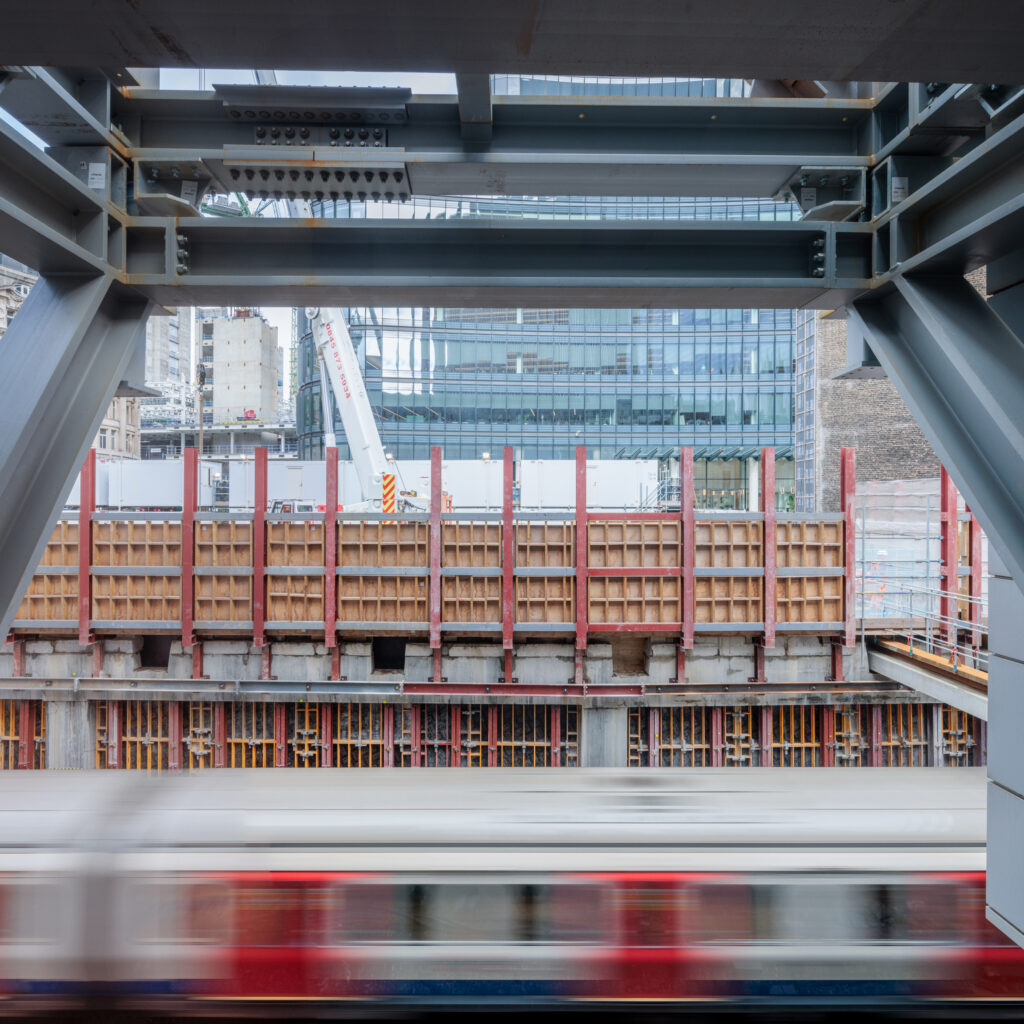
CAF members were very pleased to be able to visit the nearly completed project at 1 Liverpool Street this week. Robert Kennett, Lee Higson and Rupert Willard from Eric Parry Architects together with Ben Stallward from Aviva Investors and Jonathan Emmines, Martin Bailey and Levan Sichinava from Mace gave an informative and interesting tour of the building which displayed their enthusiasm and commitment to the project of which they are justifiably very proud. The building was originally commissioned in 2012 by a joint venture between Aviva Investors and TfL as part of the Crossrail over site programme. Whilst constructing an office building in the City might normally be seen to be a reasonably straight forward task, the constraints associated with this site can be justifiably described as super-complex which has led to one of the most complicated projects ever undertaken in the City. A combination of the Metropolitan Line tunnel, Elizabeth Line tunnels and vent shaft, a sewer, a post-office tunnel, and a City of London utilities tunnel combine to create a spaghetti like configuration which leave just 25% of the site area available for building structure to hit the ground. These constraints have tested the ingenuity of the design team and contractor to the full extent. The site sits at a pivot point between Liverpool Street station with its engineering driven architectural language, Broadgate with its sleek and sophisticated curtain wall skin and the historic character of Finsbury Circus with its grand stone buildings. AVIVA’s building on the site was an unremarkable 1980’s office block which contributed little to the townscape in the area. The scale of recent development and the importance of the location as a key hub in the City map suggested that a building of scale would be appropriate on this site – a view which the City of London recognised and were keen to support. The approach to the design adopted by Eric Parry Architects has been masterful as the building mediates between the engineering driven station spaces and the more traditional Conservation Area. The south and west elevations respond to the surrounding Conservation Area, the west facing elevation closes the vista from Finsbury Circus and views of the elegant elevation can be enjoyed from the Gardens. The north elevation provides an animated backdrop to the newly pedestrianised Liverpool Street, while the east sits as a striking juxtaposition to the building’s four storey public house neighbour. The design is unarguably modern and responds effectively to both the sinuous glazing of 100 Broadgate and the heavy stonework of Finsbury Circus. The painted cast aluminium is an innovative cladding material, and one where the fine detail can be enjoyed and appreciated by both classicists and modernists. The composition of the elevations complies with the rules of good urban design, displaying a strong base, lighter body, an attic storey and a mansard roof. The clever insertion of higher floor to floor dimensions at levels 2 and 7 not only adds subtle finesse to the appearance, particularly at level 7, but also increases the internal ceiling height thereby providing tenants with a variety of floor plates to consider whilst adding further value to those floors. The use of cast aluminium is not common, and several manufacturers were considered before Gartner were chosen to inject some precision German engineering into the process. The painted finish is immaculate and there is absolutely no suggestion that the 9.5m high piers at ground level are anything other than single pieces despite having been welded together. The colour of the cladding is consistent across the whole building as its warm grey tones respond to the Portland stone facades of its neighbours. Given the depth of the façade and fine detail cast into the metal work, the building responds beautifully to changes in light which scatter stunning geometric patterns across its face. Apart from reflections in the triple glazed facade, the only colour on the building is a rich red detail around the ground and first floors which adds a strong and confident element to the composition. The mansard roof form responds to the traditional roofs of the Conservation Area, rather than the more recent Broadgate buildings which introduce stepped terraces. Whilst the materiality at this level is mainly glass and aluminium, wide dormer windows have been introduced which not only introduce a highly articulated roof form, but also minimise the amount of sloped glazing on office floors. Horizontal zig-zag aluminium louvres run between the dormer windows and introduce a visual solidity more associated with mansard roofs, whilst reducing solar gain and allowing longer views from inside the building to be fully appreciated. The cladding was largely unitised with the 6m wide dormer elements being brought to site to be craned into place as single units. Whilst some over site developments display their structure more clearly, 1 Liverpool Street has successfully embedded what is clearly an heroic structure into the building in a discrete and sophisticated way and the design team have created high quality office space in spite of the constraints. The presence of the tunnels immediately below ground level required lifts to upper floors to start at level 1, thereby allowing them to be located in the centre of the office floor plate. The entrance hall on Liverpool Street leads people towards escalators which rise to first floor where a dynamic café area and library will be well-used amenity space. Retail units wrap the rest of the ground floor at pavement level. End of journey facilities are located at first floor with two lifts to transport cycles from pavement level. 10 upper floors of office space wrap around the core which in turn wraps around the TFL vent shaft which rises to level 8 before being capped by the top 3 floors where reconfigured cores help maximise the office floor plates and allow roof terraces to be introduced. The total NIA floor area is 16,825 sq m. The sustainability credentials of the building are comprehensive as might be expected – BREEAM Outstanding, […]
2 Aldermanbury Square
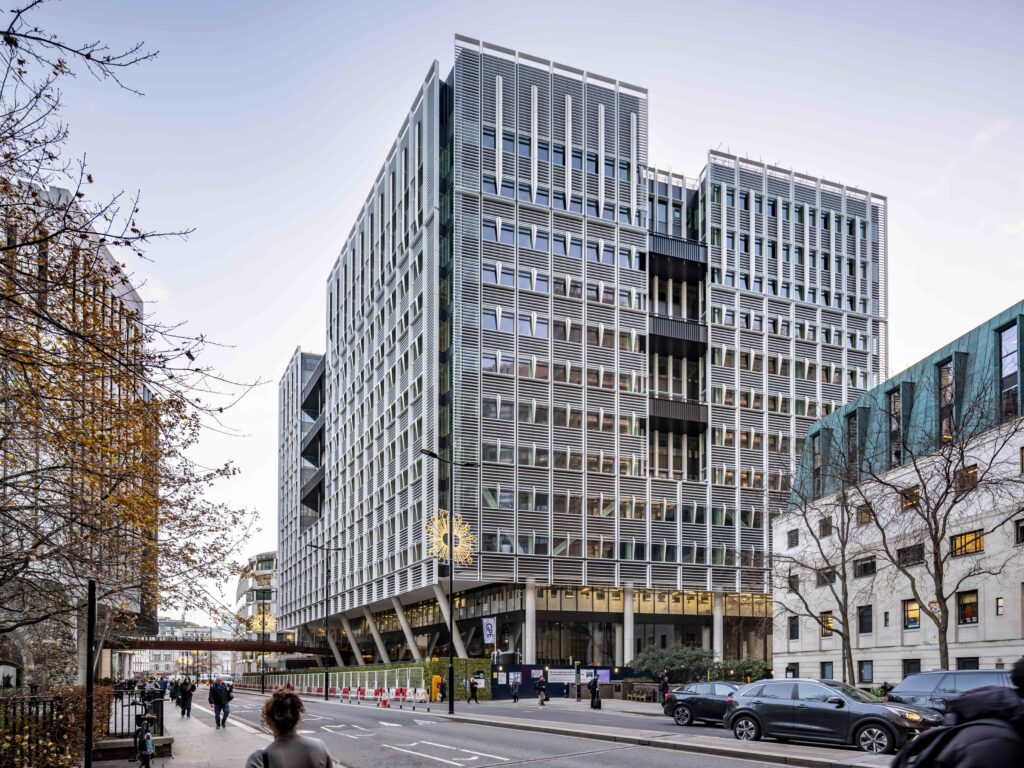
We are sincerely grateful to our hosts and guides, Piers Blewitt, Director of Development Management at Great Portland Estates (GPE), and Artur Carulla, Partner at Allies and Morrison Architects. CAF members and their guests were afforded a rare privilege: visiting the project shortly after practical completion, just days before the end user tenant takes occupancy. Access at this stage has been highly restricted, with even other market agents not yet admitted. On Monday 16 March 2026, the City Architecture Forum hosted a tour of 2 Aldermanbury Square (EC2V 5AU), a major new 320,000 sq ft office development designed by Allies & Morrison and built by Bovis. Fully pre-let to magic circle law firm Clifford Chance, the building replaces City Place House and delivers almost double the previous floor area through a more efficient structural design, increased height and carefully engineered oversailing of the public highway. This new office building replaces an obsolete 1980s office block that was unsuited to contemporary work modes, had poor environmental performance and was cut off from the ancient public realm of the Square Mile. Detailed life cycle analysis concluded that refurbishment would prove more carbon intensive rather than redeveloping the site to ambitious performance standards. So, our response has been to do just that. Carbon neutral, contextually responsive and achieving a WELL Gold standard, we are delivering one of the most environmentally progressive new buildings in the City of London to date. At 13 storeys, it also includes a new pedestrian link into the pedway network that reaches out to the neighbouring Barbican Centre. As a 13-storey structure in the heart of the City, it provides a high-density, modern presence in the City Core, contrasting with the much smaller 8-storey building it replaces. It is described as a “significant addition” to the London skyline, designed with a focus on high-quality, sustainable office space aimed at attracting top-tier occupiers. The project, which serves as the new global headquarters for law firm Clifford Chance, focuses heavily on sustainability, aiming for a “BREEAM Outstanding” rating and a NABERS 5-star rating. The tour began with twenty attendees gathering at the rear of the building on Basinghall Street, where the project team explained how the new structure rises seven metres higher than its predecessor. Rather than traditional demolition, the former building was carefully de-constructed, with its steel frame later reused in another London development—an approach that significantly reduced embodied carbon. Moving into the impressive double-aspect reception, which opens to both London Wall and Aldermanbury Square, the project architect outlined the building’s structural and environmental strategies, including striking inclined columns that support the cantilevered floors above the public realm. The group then travelled to the level 12 roof terrace, where panoramic views across the City skyline, St Paul’s Cathedral and the South Bank provided a dramatic reminder of the building’s prominent setting. Further stops included an unfinished office floorplate—revealing the raw concrete structure, exposed beams and intumescent-painted steel before fit-out—and the basement level, where generous cycle parking, gender-neutral lockers and shower facilities demonstrate the building’s commitment to modern workplace standards. Combining ambitious structural engineering, strong sustainability credentials and new public routes through the site, 2 Aldermanbury Square represents a significant addition to the evolving architecture of the City of London.
Refurbishing retrofit as ‘FutureFit’
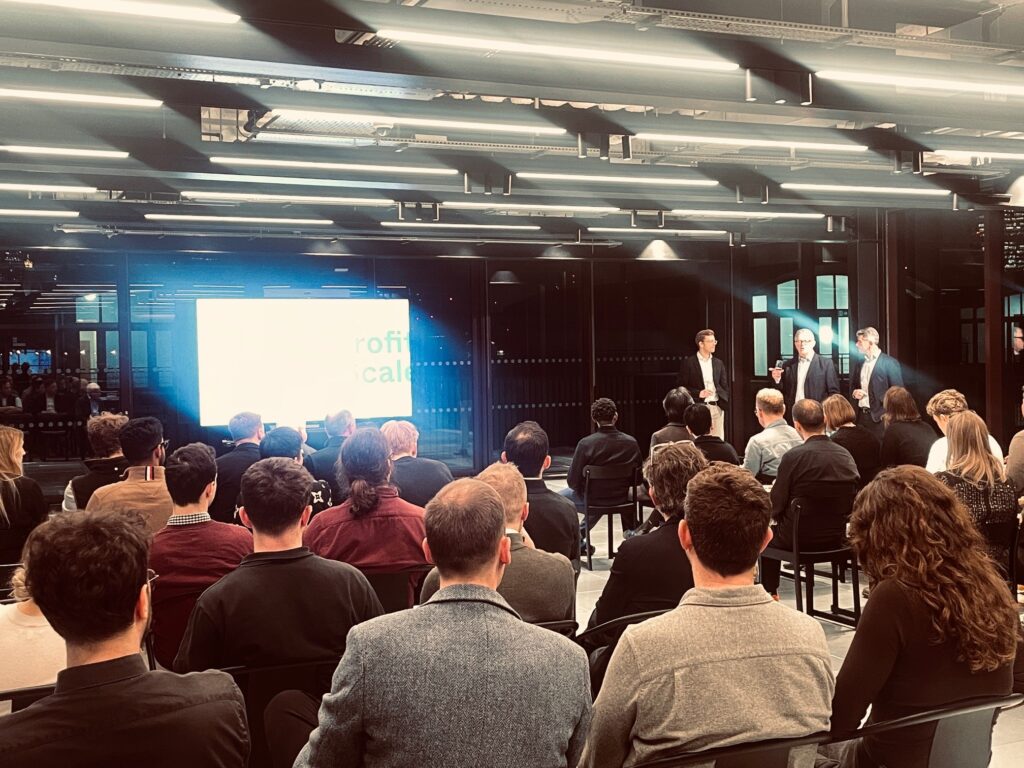
Rebranding retrofit as ‘FutureFit’ to generate a more positive, forward-looking image and removing or reducing VAT on refurb projects, with developers incentivised to pursue retrofit first through a reward based planning approach, were suggestions at CAF’s Retrofit at Scale event, hosted by architect and design firm Gensler. Gensler’s Co-Managing Director Richard Harrison welcomed members and guests to the firm’s London office overlooking the City skyline, and where Gensler has been carrying out its own ‘FutureFit’ recycling of the firm’s offices, he said. Harry Cliffe Roberts, Principal and Global Building Transformation Leader, introduced the industry guide Retrofit at Scale, produced in partnership with Opportunity London and launched last year, with a view to unlocking commercial opportunity and capital investment. His presentation framed retrofit not as a niche sustainability agenda, but as a mainstream, investable solution driving long-term value. He shared how Gensler and Opportunity London convened a cross-disciplinary working group to ask a fundamental question: what’s holding retrofit back, and how do we move from ambition to implementation? ‘Wholesale demolition has to be a thing of the past’, he argued, when ‘an era of unbounded authorship’ for architects had come to an end. ‘Why isn’t retrofit the default response?’ he said. There was an issue around ‘behaviours and attitudes, with ‘retrofit’ being regarded as ‘a second-hand product,’ he argued. ‘We have to challenge that. Retro-fit is the wrong term. We need a rebrand.’ Harry introduced his concept of ‘FutureFit’ – a reframing of retrofit as something inherently forward-looking. ‘Why is something so critical to our future branded as rear-facing? While retrofit is one of the most progressive and resilient design strategies available to us, positioning it as FutureFit shifts the mindset – designing with the existing, for the future – but also designing with future changes in mind.’ He explained the guide’s five essential pillars – Design & Delivery, Education, Policy, Behaviour & Attitudes, and Value & Demand – each addressing critical blockers that limit retrofit adoption. From embracing digital tools and shared material hubs, to strengthening industry–academia collaboration, aligning policy frameworks, and redefining how value is measured, the presentation made clear retrofit at scale requires systemic change as much as technical innovation and cultural shift. The guide doesn’t stop at diagnosis. Attendees heard a snapshot of proposed actions to shift the needle. The guide doesn’t have all the answers, but aims to hold space for the conversation – creating a shared framework that enables the industry to tackle these challenges collectively, in tandem and in a common direction. A new model is needed for the industry to operate effectively, and it’s clear that the current frustrations and barriers to adopting reuse stem largely from ambitions clashing with an outdated model. The Q&A was lively, reflecting a shared recognition that while challenges are complex, there is appetite and momentum for change. There was a collective passion to make retrofit happen. Rob McNicol, Assistant Director of Policy and Strategy and Kerstin Kane, Principal Planning Officer (Sustainability) from the City Corporation attending, invited Harry and the audience to consider what future policy incentives could make retrofit a more attractive development pathway and to submit representations on the City’s draft SPD Planning for Sustainability (adopted in February 2025 but to be updated for the new City Plan 2040 due to be adopted this year). This sparked discussion on removing taxation barriers and exploring a credit‑based system – similar to New York’s Local Law 97 – to stimulate innovation and reward more ambitious ‘FutureFit’ schemes. Other points raised were that the new draft NPPF seems to say ‘less about retro-fit than the previous version’. Also, should the RIBA’s Plan of Work, a widely used model for the design and construction process, be changed to include a requirement to consider retrofit? The evening concluded with continued conversations as guests connected across disciplines and perspectives. With the London skyline as a backdrop, the event felt symbolic, overlooking a city full of existing buildings, and an industry increasingly aligned around the opportunity to reimagine them. The blue line shows the decline in emissions required to meet net zero in 2040 Estimated floorspace rated EPC B or above, showing the current rate of retrofit to the target date of 2030 in mid-blue, and the required rate of retrofit to meet EPC B or above
Helical’s 100 New Bridge Street nears completion
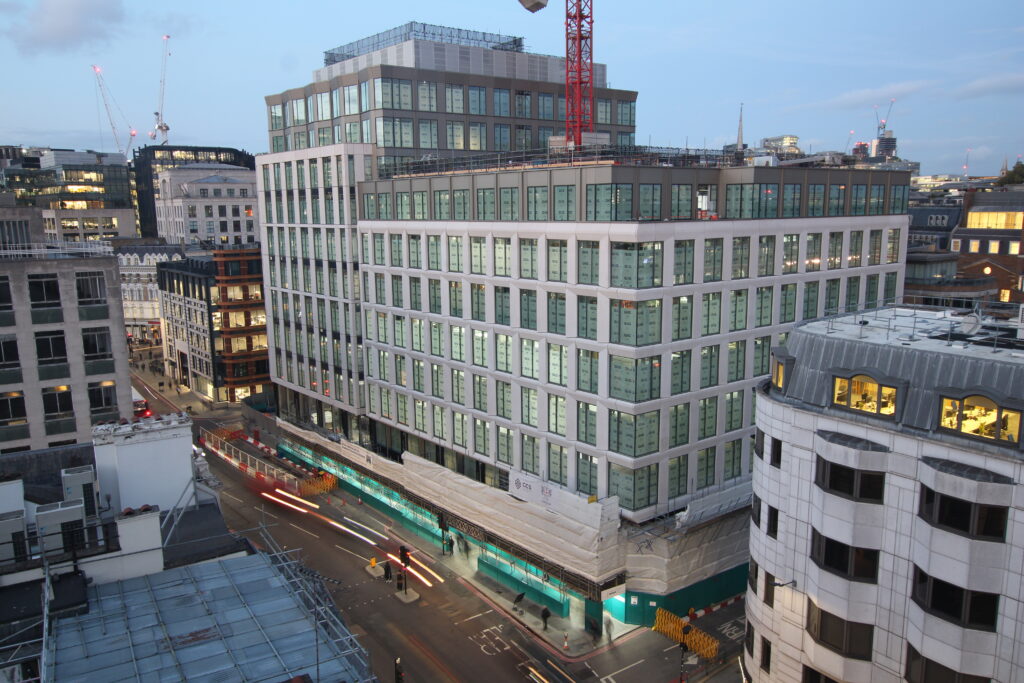
CAF members visited the soon-to-be-completed project at 100 New Bridge Street, a retrofit project of an existing building (completed in 1992) to renew the life of the building to meet current tenant requirements and environmental standards. Developed by Helical and Orion, with architects Gensler and main contractor Mace, the project is nearing completion with final finishes and landscaping works underway. Gensler and Mace presented key aspects of the building, including a synopsis of the existing building, described as typical for its era, with good floor-to-ceiling heights, and structural frame, but with the entrance in the wrong place and an uninspiring façade. The building sits over the City Thameslink rail line, so to combat structure-borne vibration it was constructed with spring dampeners at the basement level which isolate the building above. One of the key aspects of the project brief was to not touch the basement or foundation levels. Primary changes to the existing design comprise two additional floors of offices at levels 9 and 10, floor plate extensions to the entire western façade, infilling of previously set-back corners, with additional massing created to the east, and the infill of the existing atrium. These alterations have provided 30,000sqft NIA additional floorspace whilst maintaining compliance with LVMF protected views of St Paul’s. The entrance, formerly in the centre of the main façade, has been repositioned at the north east corner to face towards Ludgate Circus. A garden terrace has been added to provide tenant outdoor amenity space, and the ground floor has been opened up to provide more visual transparency to New Bridge Street and a better arrival experience. Key Aspects of the Project Sustainability & Carbon Performance Construction, innovation and prefabrication Prefab’ strategy expansion Project delivery and outcomes
New embodied-carbon contender for Farringdon
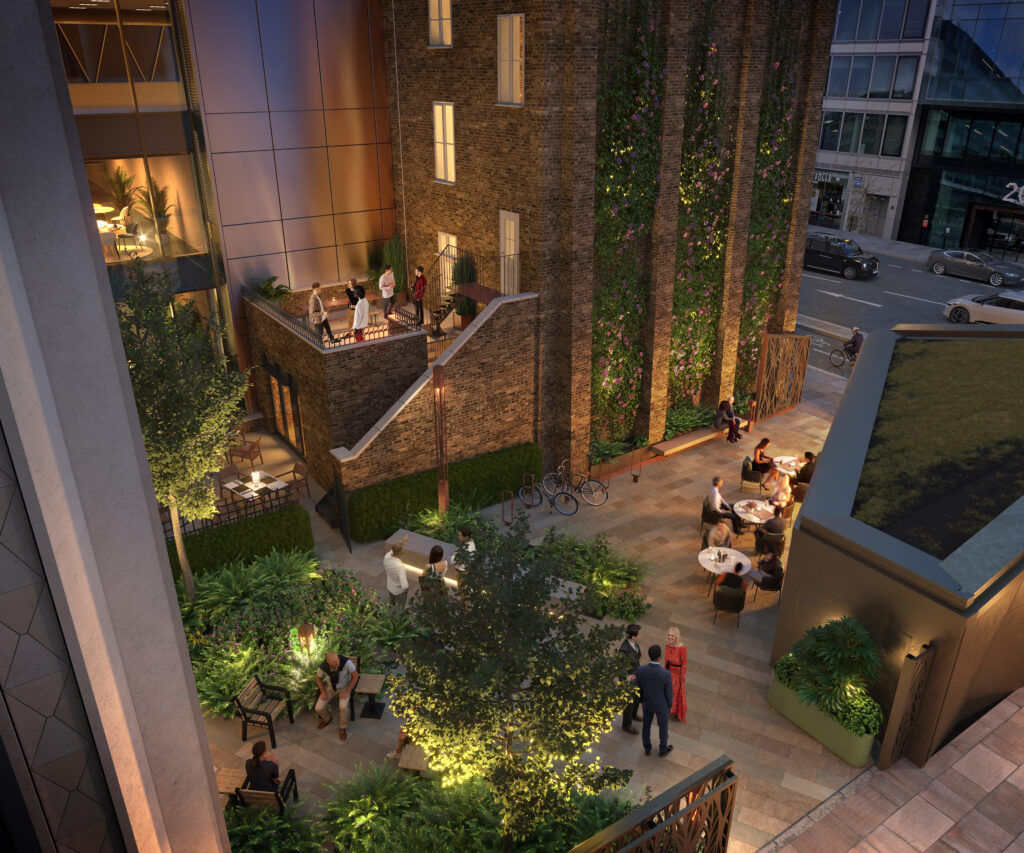
The City may have a contender for best-in-class when it comes to the lowest levels of embodied carbon for a new building.
One Leadenhall Street Event Review
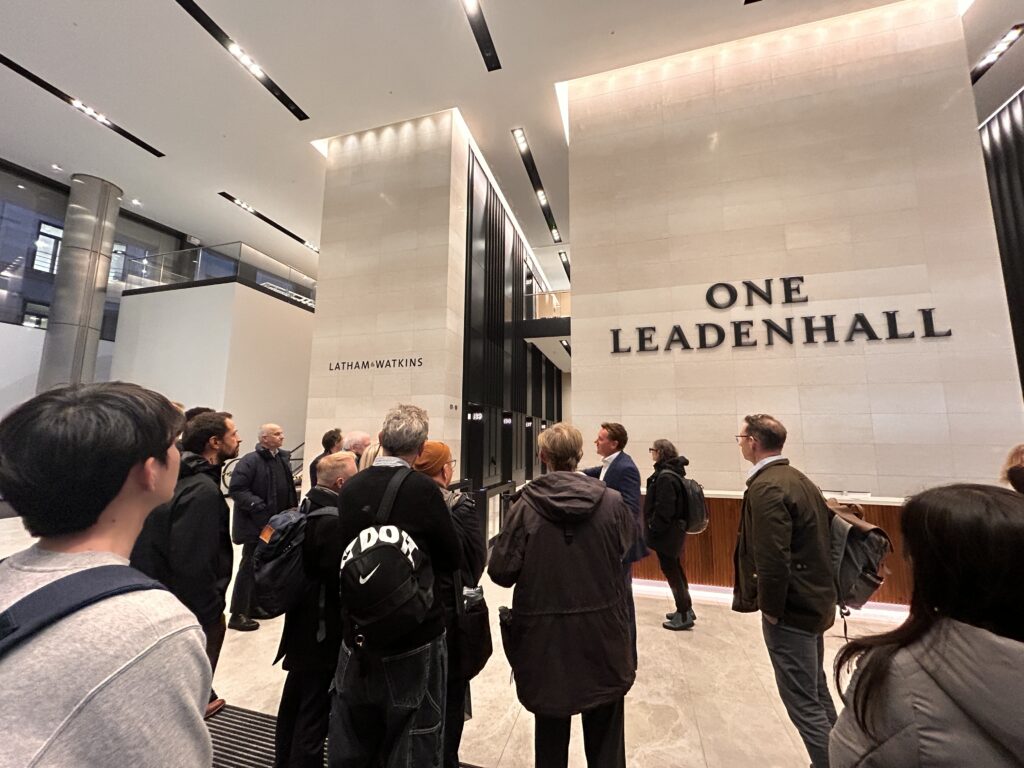
Yesterday’s journey through One Leadenhall Street was nothing short of architectural poetry in motion.
City Architecture Forum: Annual Dinner 5 November 2025
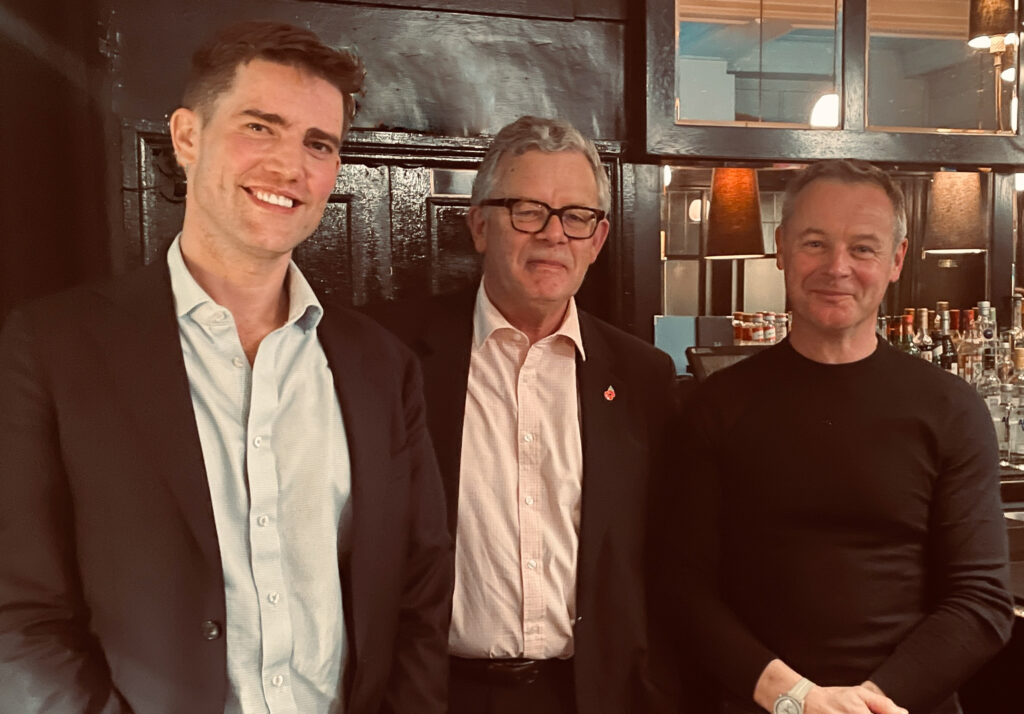
Read the report on our Annual Dinner 2025 with guest speaker Tom Sleigh, Chair of the City’s Planning and Transportation Committee, and Robin Dobson, CEO of Platform4
Reflections on the Talk: 85 Gracechurch Street

Architecture is at its most compelling when it not only responds to context but actively reshapes it, carrying the past into the present while opening doors to the future. Last Tuesday’s talk on 85 Gracechurch Street delivered on this, offering an inspiring glimpse into a landmark scheme that sits at the meeting point of ancient history, London’s history and forward-looking design.